TRANS HOPE stands up for the marginalised trans community
Asante Lala

While the Constitution guarantees transgender people the right to equality and the right not to be discriminated against on the basis of their sexual orientation and gender, the reality is that transgender people also face violence and harassment from officials and private citizens.
It is behind this scenery that Trans Hope stepped in and identified the need to become a voice of transgender individuals in KwaZulu Natal. Trans Hope is the first KZN based organisation solely focusing on the Rights of the Transgender Community.
From wanting to help transgender individuals within Umlazi where violence against LGBTI+ is said to be high, the Founder, Sazi Jali saw the need of spreading support across the province. Jali embarked on a journey to bring hope to the transgender and gender diverse community and as a result, the organization was formed and registered in 2019.
Trans Hope was birthed out of a support group for transgender individuals and this group made it possible to see ‘participation approach’ working and has helped many transgender individuals according to their needs. As the first trans-lead organization in the province, the founders wanted the trans community to have access to better resources and for the NGO to be a voice for transgender individuals.
Trans Hope wanted to bring hope to the trans community, and that is where their name of the organization stems. As a champion for trans individuals, the organization’s mission is to increase knowledge about gender identity and sexual orientation expression as well as sexual characteristics (SOGIESC).
“We want to create safe spaces for people who are gender diverse, through killing stigma against LGBTQ+ by building our community and empowering them with understanding about the diversity of humankind,” said Trans Hope.
The NGO is currently based in Umlazi U Section and services the whole of Umlazi. For its accessibility to those who are in need of its services, the youth led organisation has joined scores of young people in utilising online and social media platforms.

The organization also deals with walk-ins as part of its quest to serve the community. What makes Trans Hope special is that its staff are from the community, which makes people relate to them on more than one level. From humble beginnings, the community-based NGO has grown and provides support in 8 districts within the province making it more of a community led organization than a community based one.
As part of its scope, Trans Hope works to empower its community by providing knowledge about LGBTQ+ issues and health care whilst the bulk of its time is spent on advocacy work. “We sanitize schools, clinic, hospitals, churches to provide a safer place for transgender and gender diverse people. We also provide training and conduct workshops,” said the NGO.
Trans Hope has become a home for transgender people within the province with aspirations for mainstream gender diversity in the community now and in the future.
The goal is to achieve this by providing safe spaces within both public and private institutions that trans and gender diverse people can cross paths through education and advocacy. Although the NGO faces barriers such as lack of funding, it says that the biggest reward it experiences is being able to work at ground level and making sure that support and funding is reaching the community.
.
SPOTLIGHT
A Special Kind of Love:
The Nhlaphos
Thabisile Gumede
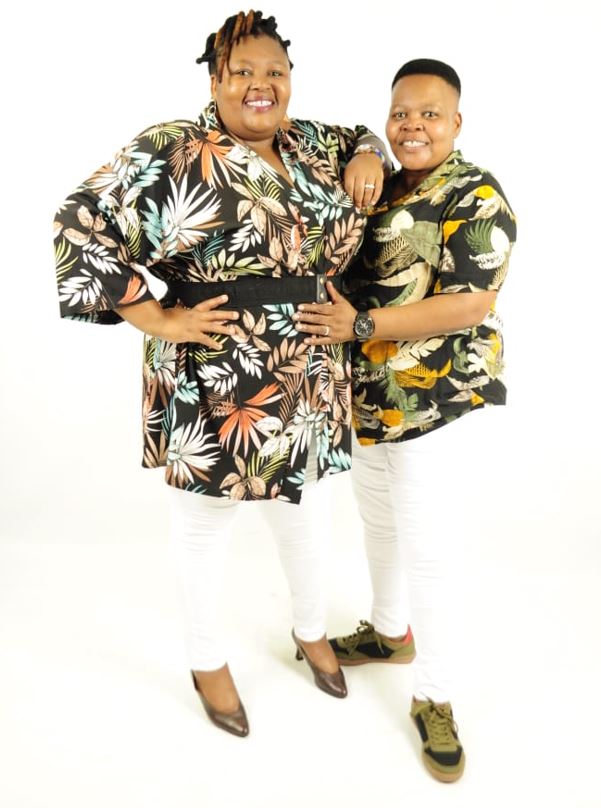
To celebrate Valentine’s Day, we at UniQ Magazine wanted to share a story that inspires us about the lasting power and strength that comes with real, honest love. The following is a love story of Dr Thuli and Londiwe Nhlapho.
Despite the last several years of increasing LGBT visibility, gay, lesbian and trans people still remain largely missing from traditional South African media when it comes to finding images and representations of themselves as romantic and loving couples. Valentine’s Day isn’t an exception to this rule. To celebrate Valentine’s Day, we at UniQ Magazine wanted to share a story that inspires us about the lasting power and strength that comes with real, honest love.
Finding each other
In a country where LGBTI+ individuals are constantly facing the wrath of conservative groups, standing proud as a queer couple is a marker of courage.
Dr Nhlapho and Londiwe met at what many may consider a chance meeting or a work of fate if you believe in that philosophy. When asked about their first meeting, the filminess of it caught my attention. “Our love journey began in April 2012, when I was invited by my friend to a surprise birthday of her girlfriend in Clermont. I immediately had a crush on Londiwe and began experiencing a warm and fuzzy feeling towards her, and my imagination started running wild. I approached her and we exchanged contacts,” said Dr Nhlapho. The first thing he noticed about her was her beautiful smile and kind voice and Londiwe later made an impression on Dr Nhlapho with her warm hug.
“On our first date I took her out for dinner at one of the most beautiful hotels in Durban and we spent the night together. It was the best first date! As soon as I laid eyes on her, the electricity of our connection lit up the room,” Dr Nhlapho’s excitement is palpable, as he recalls their meet. In nurturing their relationship, communication channels were open at all times.
Dr Nhlapho says he knew things were getting serious between them when they started to go to church together and Dr Nhlapho introduced Londiwe to his family and friends as proof that he wanted her to know more about his personal life and show her that he is not hiding her from the people he values the most. They also started to attend family gathering and events together. “Two years after we first met, we started to live together. In those days I was going through a lot of ups and downs but even at my worst she was still standing by my side. She never gave up, even when my ex-girlfriends provoked her, she never fought back, but she was always calm and humble. I knew she was the one when I would give her money to spoil herself but she would spend it on me or buy something that would benefit us both,” says Dr Nhlapho with pride. As I dig deeper about their first few meetings, it is clear that this couple has had their fair share of heartbreaks before reaching this place of peace.
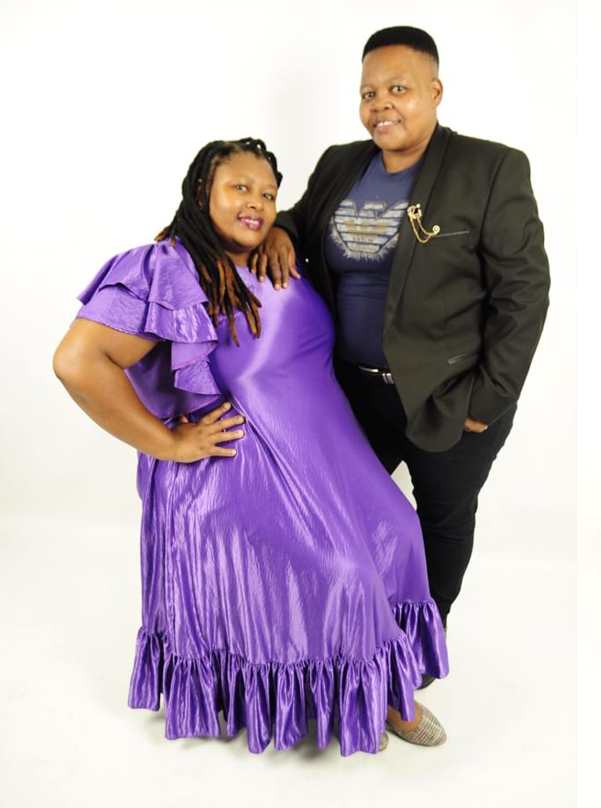
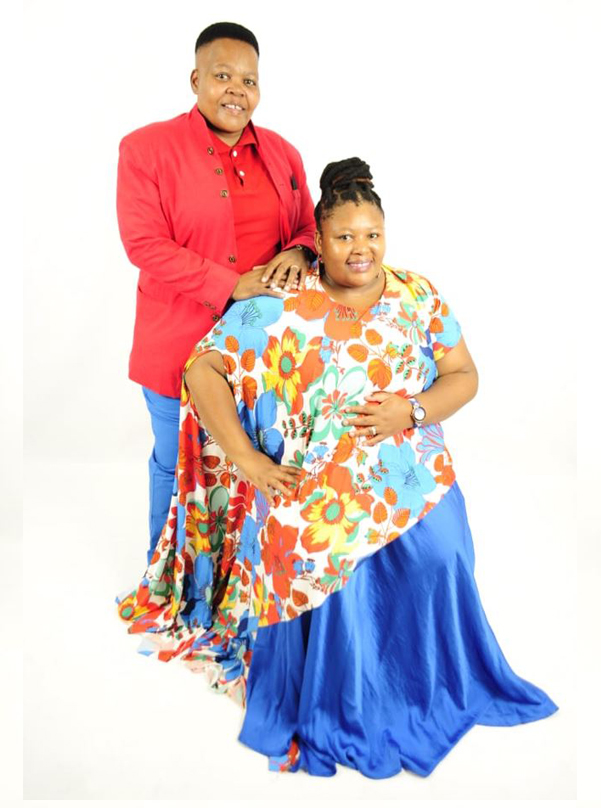
Dr Nhlapho says his family was so happy to meet Londiwe as she is so friendly and easy to communicate with and she showered his family with love and respect. Their main concern was whether he had found the one and if he would eventually marry her. He put their concerns to rest when he asked for her hand in marriage and paid lobola.
“I knew I would marry her because every time we would talk about the future she would always say “WE”. When I planned something, I would always use the word “I” and she would immediately correct me to use the word “WE”. I also had 10 values that I was looking for in a woman of my calibre, namely Honesty and Trustworthiness which go hand in hand, Love of the family, Communication, Business minded, Financial management, Self-improvement, Self-discipline, Supportive and Inspiring. She had seven strong values out of the 10 so I decided to cover her three weaknesses as my partner because I loved her,” explains a smitten Dr Nhlapho.
Three years later, Dr Nhlapho took Londiwe to a jewellery shop to fit the ring of her choice. He then promised her that he’ll organise an engagement party the following year. A month later he bought the ring and waited for the right moment to officially propose. The opportunity arose after a weekend away visiting family at Eshowe. When they arrived home Londiwe was exhausted and complained of being tired and wanting to take a nap while Dr Nhlapho offloaded the luggage from the car. He then took the opportunity to kneel down and ask her to marry him. Londiwe was so surprised and speechless, but she said yes and made Dr Nhlapho the happiest person on earth.
They tied the knot at a special ceremony shared with family and friends and the couple has been married for eight years now. “The most special part of our wedding was my surprise birthday party on the same day and seeing both families believe in and respect our same sex marriage and giving us their blessings,” recalls Dr Nhlapho.
The couple has kept the romance and fun in their marriage by always being there for each other, sharing ideas and responsibilities, respect and spending quality time, and putting the other spouse first. Lots of sex, flirting and daydreaming together has also kept this couple together. The couple says they celebrate Valentine’s Day every day as they love each other unconditionally.
“Our hopes for the rest of our marriage is to put God first in our lives as He is faithful and that alone gives us hope in our marriage. We teach our children how to love each other and we want to grow old together,” concludes Dr Nhlapho.
.
Celebration of 2023 Cancer Day
Asante Lala
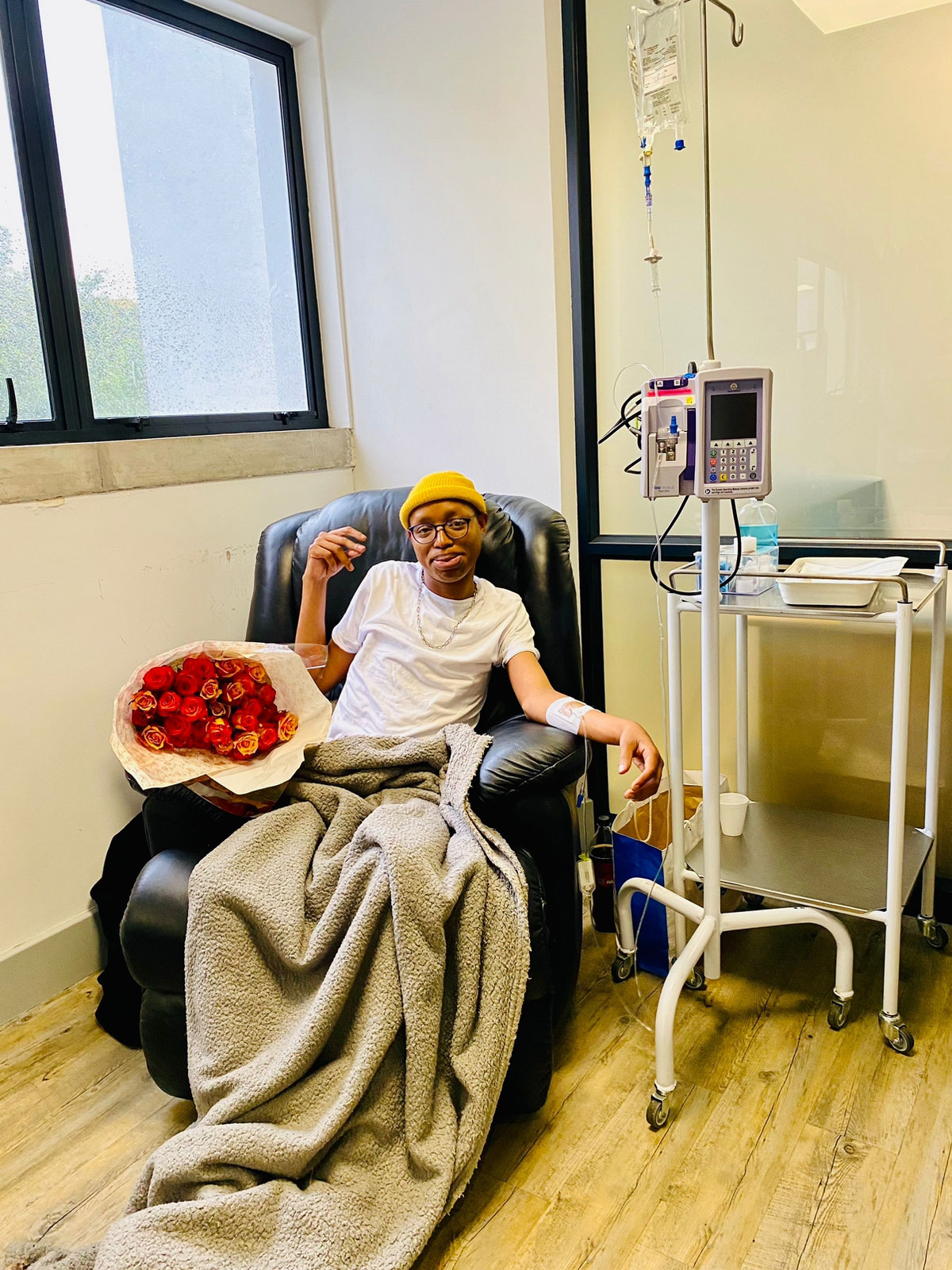
Cancer survivor credits social media support for helping him through his fight
Worthwhile celebration of 2023 Cancer Day for Mwelase, with Social Media as part of his support system.
It’s 2022, the world is slowly getting back to normal. As things return to normal, you get a life changing job offer and an opportunity to change cities. That’s how life happened for Siyanda Mwelase from KwaMashu in Durban. In 2022, the 28-year-old left his hometown to pursue greener pastures in Johannesburg.
The young queer matriculated from Newlands East Secondary School, graduated at Richfield Graduate Institute of Technology and received a job offer and he took it. Everything was going accordingly; however, things took a turn for the worst, very quickly. He was diagnosed with Stage 2 Colon Cancer.
Mwelase revealed that after starting his job, he started getting sick but stalled when it came to seeing a doctor thinking he was just adapting to the new environment. “I stalled going to see a doctor until June when I really could not handle being in the office and I was taken to the ER and admitted for about three full weeks,” said Mwelase.
The “worst day” of his life was on the 20th of June when he was diagnosed. “To be honest, I felt like the walls were literally closing in on me. It was really the worst day of my life,” he said. On living with cancer, Mwelase revealed that his younger brother, Owethu, took on the role of caregiver since most of his family were in Durban.


“He cared for me and saw me at my worst. My mother was broken by the news at the time but my whole family was supportive. After I started adjusting to chemotherapy, they would fly up to check on me,” said Mwelase.
In an honest conversation, he revealed that chemotherapy is not the best, however, he was emotionally invested in winning his fight against cancer.“ It’s a draining process I won’t lie but it is worth it. It’s all about having a positive mind set. My oncologist encouraged me to just be strong,” said Mwelase. Although he is back at his job as an administrative assistant for Universal Health and did his last chemo, he admits that his body is still not at 100%.
“My life really changed. I’m weaker physically but I’m stronger emotionally and spiritually, but after everything I really did take a knock to my body, weight and mental health,” said Mwelase.
The biggest lesson he has learned in 2022, is that life is short, so live. “I watched movies with cancer patients. I never thought in a million I would be one, so live your best, love the best way you can. I’ve never felt so vulnerable and sick in my entire life, however, the support from social media helped me get through it. I fought because of people believing in me. But in all, just live!” he said.
.
EDITOR’S PICK
Media Funding for LGBTI+
Gugu Madonsela aka Donsy Kunene
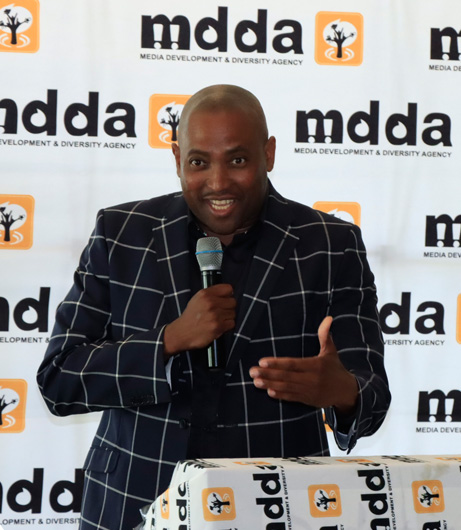
A beacon of hope for the LGBTI+ media landscape
While some celebrate new jobs and new opportunities as 2023 commences, an LGBTI+ educational and lifestyle publication celebrates its opportunity to be the first and only media project to be funded by the Media Development and Diversity Agency (MDDA). MDDA recently approved thirty-three (33) community media projects and small commercial media for the 2022/23 grant funding cycle where UniQ Magazine SA learnt that it is the first and only LGBTI+ project to be funded since the Agency’s inception.
UniQ Magazine says this historic move by the MDDA serves as a symbol of pride and a beacon of hope for all future generations within marginalised groups. It took the publication more than three applications over three grant cycles to get the Agency to warm up to the idea of a LGBTI+ project.
“We are thrilled to finally make it to the list of the media projects funded. We pride ourselves for being persistent and not giving up. This financial support received, is a milestone to us and a tool to contribute immensely towards the media diversity of this country” says Indlovukazi Mapule, The Project Manager.
Mapule further said the publication was not chosen as the beneficiary out of pity, but it worked hard to present itself as a unique and worthy project. She commended the agency for demonstrating the importance of promoting the educational projects of the marginalised groups such as the LGBTI+ Community.
All the doubts and fading dreams are reinstated by the agency that has proven its commitment towards enabling “historically disadvantaged communities and persons not adequately served by the media” to gain access to the media.
As per a statement shared by the Agency, its mandate contributes to citizens of the country by ensuring the historically disadvantaged communities and historically diminished language and cultural groups; and inadequately served communities gain access to public information that can empower their lives.


.
Small wins for the LGBTI+ Community
Joseph Thabo Maluleke
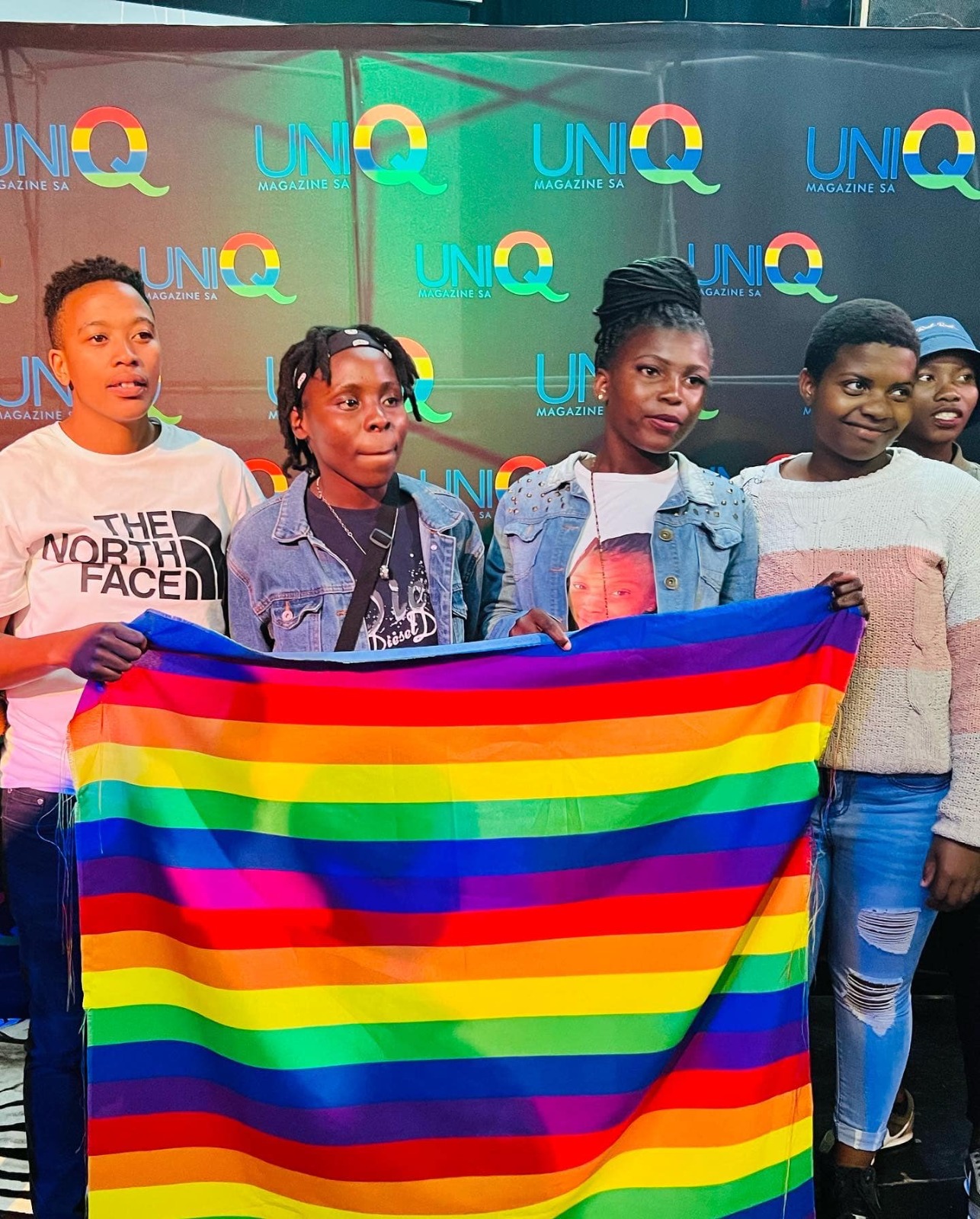
OXFORD dictionary enhances its vocab
More inclusive words added to accommodate LGBTI+ community – thanks to OXFORD ENGLISH DICTIONARY
For many years discrimination of the LGBTI+ community has not been only experienced and intensely felt within churches and in society but even academically. Homophobes find pleasure in humiliating homosexuals by using derogative words for lack of proper terms and definitions. For some LGBTI+ community, language is key to their self-identification and inclusion in society.
The recent move by Oxford English Dictionary to add 18 LGBT+ defining terms in its dictionary is celebrated as a victory. These newly added terms are an addition to revised definitions of man and woman by the largest dictionary in the world in 2020. These adjustments in the academic world are a result of a successful online petition signed by nearly 35 000 people. A backlash from critics and activists described previous definitions and its accompanying derogatory synonyms as “sexist”.
The changes will apply to the Oxford English Dictionary and the publisher’s other dictionaries.
The dictionary added several new LGBTQ+ defining terms, and the comprehensive list of terms include “gender-affirming”, “demisexual”, and “enby”. Newly coined terms like “gender expression” and “gender presentation” are also defined in the dictionary.
Moreover, the dictionary added more cultural slang terms, like the LGBTQ+ definitions of “top” and “bottom”. The “LGBTQ” acronym is also among a new group of defined words introduced in September 2022 by the dictionary.
Additionally, Oxford also introduced specific English terms relevant to the indigenous perception of gender identity and sexuality. “Brotherboy” and “Sistergirl” are two new entries referring to gender presentation and identity in Australian Aboriginal communities, while “Muxe” (pronounced ‘moo-shay’) refers to a gender identity phrase used in southern Mexico by Zapotec communities. The dictionary now includes additional definitions: “gender-critical” and “TERF”, as well as “anti-gay” and “anti-homosexual.”
Here are 11 definitions we chose to share out of 18
Bakla – “a person registered as male at birth who identifies with or presents a feminine gender expression, typically through behaviors, occupations, modes of dress, etc., that are culturally associated with femininity.” The dictionary further notes that “bakla encompasses a wide range of gendered characteristics and practices that do not correspond to heteronormative ideas of masculinity. It can often, but not always, denote homosexuality, although the term is increasingly being used as a synonym for Western terms relating to sexual orientation, such as gay and homosexual.”
Brotherboy– A person registered as female at birth who identifies with or presents a masculine gender expression, typically through behaviors, occupations, modes of dress, etc., that are culturally associated with masculinity”.
Enby – A colloquial term used for a non-binary individual.
Gender-critical – “Critical of the concept of gender identity, or the belief that gender identity outweighs or is more significant than biological sex. In sense (b), typically distinguishing between gender (as something culturally or biologically defined) and gender identity (considered an innate individual sense).”
LGBTQ – Acronym (for lesbian, gay, bisexual, transgender, queer).
Multisexual – “Characterized by sexual or romantic attraction to, or sexual activity with, people of different sexes or gender identities; (now) spec. having any of various sexual orientations of this type, such as bisexual, pansexual, or polysexual.”
Muxe (pronounced as ‘moo-shay’) – “a person registered as male at birth who identifies with or presents a feminine gender expression, typically through behaviors, occupations, modes of dress, etc., that are culturally associated with femininity.”
Pangender – “Designating a non-binary person whose gender identity encompasses multiple genders, which may be experienced simultaneously or in a fluid, fluctuating manner; of or relating to a gender identity of this type.”
Sistergirl – Assigned male at birth but presents in ways seen as feminine.
Tea house – “A public toilet used by men to engage in or solicit sexual activity with other men.”
TERF – “Originally used within the radical feminist movement”, to refer to trans-exclusionary radical feminist.