
COVER STORY
Tha Simelane
Thabisile Gumede

Tha Simelane’s star rises as multi-faceted career soars
Born and bred in in KwaMashu, Durban, Tha Simelane is a well-known socialite, an Actor, Ambassador for RoyalAM, GBVF Ambassador for KZN Office of the Premier and a well-known MC in SA. Raised by a single parent, Tha grew up in a family of six and studied in KwaMashu and ventured out to study teaching at the University of Free State. A teacher by profession, Tha has been teaching for 25 years and is currently the Deputy Principal at JE Ndlovu High School in KwaMashu.


Although teaching is a part of his daily life, Tha says he feels most alive in the entertainment industry. He has been an event host for the past 15 years, featured at top events in SA such as the Durban Jazz Festival, Midmar Jazz Festival, Dundee July, Jazz in July, to mention a few.
His acting career has also been on the rise as he has been featured in various TV series including: Kwaito Church Service, Luthando on Mzansi Magic, Uthando Lwethu and Ukhakhayi. Currently, he is shooting a new character on the famous Drama series, Uzalo named Jafta. Tha continues to be a part of the reality show KwaMaMkhize Season 2 which he is currently shooting.
“Entertainment is my passion which I consider my true calling. When I am acting or hosting, I am fulfilled and it doesn’t feel like a job as I am fulfilled in every way possible; I get to be myself,” says Tha.
Tha has recently broadened his business portfolio by opening a private company where he is the Director, called Nontandakubukwa Public Relations. The company aims to start managing and promoting a variety of artists from 2024.
“I’m looking to manage big, professional brands of artists that can sing live like Thandiswa Mazwai or a brand that can be sellable. The company will be beneficial to the youth of the country that want to be discovered and developed,” he says.
Tha says he wouldn’t be the person he is today if it wasn’t for his mother and MaMkhize who have had the greatest impact on his life. “My mom has been a single parent for many years and has been a great support. My friend, Mamkhize came into my life and my life changed,” recalls Tha.
Regarding his relationship status, Tha says he is currently not in a relationship and not interested in being in a relationship at this stage and time. “This year I’m busy with the process of having a baby. I have found a surrogate to carry the child, and everything will be done in a laboratory,” explained Tha. He says he would like to have twins and cannot wait to be a father.
3 things that people don’t know about him:
• He is an introvert, very shy, a private person who enjoys his personal space
• He loves money
• He only has two friends
5 things he can’t live without:
• Phone
• Banking Apps
• Car
• Shelter
• God
.
EDITOR’S PICK
Human Rights Defender
Gugu ‘Donsy Kunene’ Madonsela
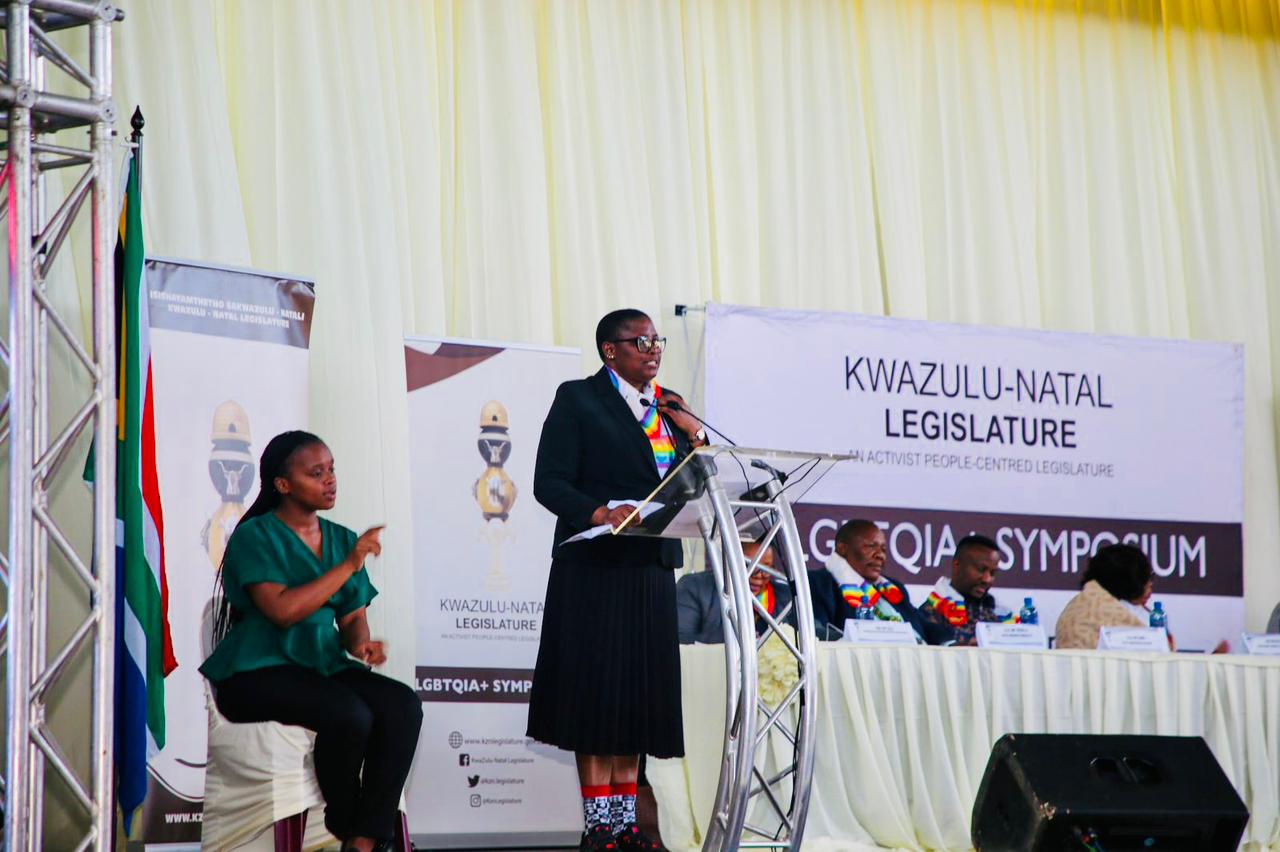
KZN Legislature Speaker acclaimed as a Human Rights Defender
This year marked the 3rd year of the KZN Legislature LGBTI+ Hybrid Symposium on Human Rights. The symposium attended by LGBTI+ representatives from 11 KZN District Municipalities; KZN Government MECs, Mayors and other relevant stakeholders, was held under the theme- Strengthening Solidarity for “Inclusion, Visibility and Representation”.
Dignitaries took turns delivering messages of support and presenting their roles in protecting and promoting the rights of the LGBTI+ Community. Each speaker seized the opportunity to sing praises of the role that is played by the KZN Legislature Speaker, Nontembeko Boyce in defending and promoting the rights of the minorities through meaningful sectoral programmes.
Speaking on behalf of the KZN Premier, MEC Khoza for Social Development, highlighted that it is unacceptable that 30 years into democracy, LGBTI+ community is still discriminated socially, educationally and in workplaces. She applauded the KZN Legislature Speaker for her prowess in defending the rights of all humans regardless of their sexuality. She further said parents should be accommodating and accepting of all their children.
In his opening remarks Mayor of Umgungundlovu District, Cllr Muziwokuthula Zuma said violation of rights of the Queer Community should be obsolete.
“We are experiencing low levels in reporting crimes committed against LGBTI+, fewer cases reported doesn’t translate to cases also being low, but it means most cases are not reported. We need swift response and full participation from Government, Traditional Leaders, and Civil Society. We are all duty bound by the Bill of Rights to put an end to the violation of rights of LGBTI+ Community,” says Mayor Zuma.
The Mayor of Msunduzi Municipality, Cllr. Mzimkhulu Thebolla, encouraged all the duty bearers to take a stance in unison on non-discrimination against LGBTI+ community and recognise the right of everyone who resides in South Africa regardless of their gender, sexuality, and race.
“As the City of Choice, we have a high population of LGBTI+ community thus we fully support the programme led by our Speaker Nontembeko Boyce and wish for everyone to form part of educational and awareness programmes. We believe that such programmes will teach us to co-exist. We encourage ONE MESSAGE – MANY VOICES,” says Cllr Thebolla.

KZN Legislature started the fight to end discrimination against the Queer Community with consultations in 2019, educating people and constituencies so that they can start talking because the matters of sexuality are not taboo. Symposiums started in 2021 during COVID on an advocacy level addressing issues of crime and discrimination through the law.
Delivering her keynote address, the KZN Legislature Speaker, Nontembeko Boyce put an emphasis on the implementation of the provision of access to an affirmative health system through specialised reproductive health. Boyce said reproduction should be according to the needs of an individual instead of an umbrella approach. She further encouraged everyone to organise and mobilise for the protection and promotion of the rights of the LGBTI+ community.
“We need to have friendly clinics that accommodate everyone while acknowledging the individual needs. A lot needs to be done within education and health sectors on the rights of minorities. We all need to be visible through positive behaviour; respecting the rights for all; creating and occupying spaces,” says Speaker Boyce.
With resolutions taken last year, participating departments presented their responsive feedback on their contribution to the LGBTI+ community and the crucial role they play in protecting and promoting their rights. Participating departments committed to a collective responsibility to end LGBTI+ discrimination and to provide access to all services are Education, Sports, Arts & Culture, Social Development, Labour, and Health.

Masculinity is not cast in stone
Thabisile Gumede
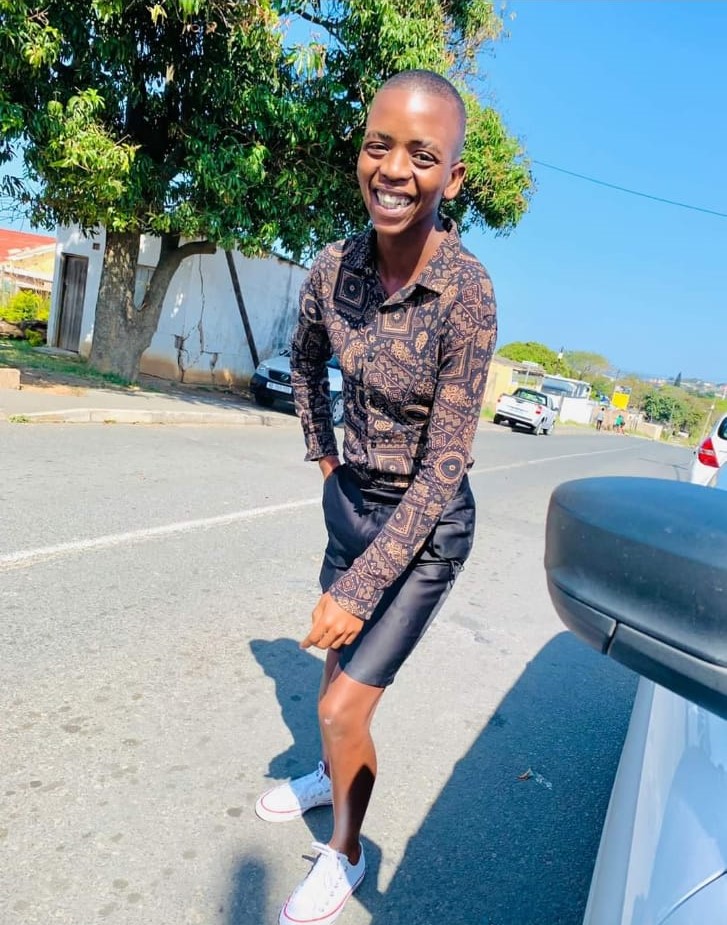
Masculinity is not cast in stone says father of Gay Teen
Society has become more open and accepting of LGBTQ individuals, and young people are beginning to come out at earlier ages than they did a generation ago. However, it is sometimes not easy for LGBTQ teens to come out. Their journey often begins with tears, self-loathing, and sometimes substance abuse. The adolescent pressure to fit in collides with the desire to be honest with friends and family. They struggle to accept themselves and worry who might find out. They are often bullied or ostracised by their peers.
Fortunately, Mmeli Skhosana (18) says he has a “very accepting and open parent.” When he first came out to his father, Nkosinathi Appies (47) at age 11, his father accepted his son and vowed to support him in every life decision he makes. His response was key, he says, giving him emotional security and the knowledge, he wouldn’t be rejected, along with making home a safe place.
Nkosinathi says Mmeli chose to come out over the phone. “He called me and told me that he is gay, meaning he does not like to date women but prefers to date men. My first reaction was confusion. I thought that he did not fully understand what he was saying because he was still young at 11 years old,” recalls Nkosinathi.
Mmeli’s new revelation had Nkosinathi confused but he decided that he would not treat his son any differently. “I decided to be positive and did a lot of research about sexuality and what it means to be gay. I was glad that he had chosen to confide in me and that I did not hear the news from other people,” he said.


When Nkosinathi shared the news with the rest of his family, they too were confused and felt that Mmeli was too young to make such a drastic life choice, but now they accept him and understand his lifestyle. “I sat down with them and talked with them at a family meeting and made them understand that we need to accept him and support him because he is young,” he said.
Currently the relationship between Mmeli and the whole family is good. “As a father he respects me and even approaches me as his friend,” quips Nkosinathi. He would like people to see Mmeli beyond his sexuality and realise that he is a teenager like any other. “He is a respectful person, and he likes fashion and modelling. I wish that I could buy him all the latest fashion trends he wishes to wear. He is beautiful and looks good in anything he wears. I would like him to achieve his dream of being a fashion designer and model,” says Nkosinathi.
A word of advice to other fathers who have gay children, Nkosinathi says: “If you are a man, stand up and be a man, don’t disown your child, instead make sure they get the support they need. Make sure that people understand your child and stand by them. You may need your child in future. Protect them and make them feel comfortable.”
Nkosinathi says that living with a gay son has taught him that masculinity is not cast in stone. Feminine-presenting gay men are still disadvantaged compared to gay men who present in a more traditionally masculine way. “There are different types and shades of masculinity and I’ve learned that … it’s OK to be who you are,” says Nkosinathi.
Experts say research shows that how parents respond can be fundamental to their children’s mental health and well-being, now and in the future.
Read our USEFUL INFORMATION section for parent’s tips on how to respond to your child’s sexual orientation.
Morningside Pop Inn Clinic
Asante Lala
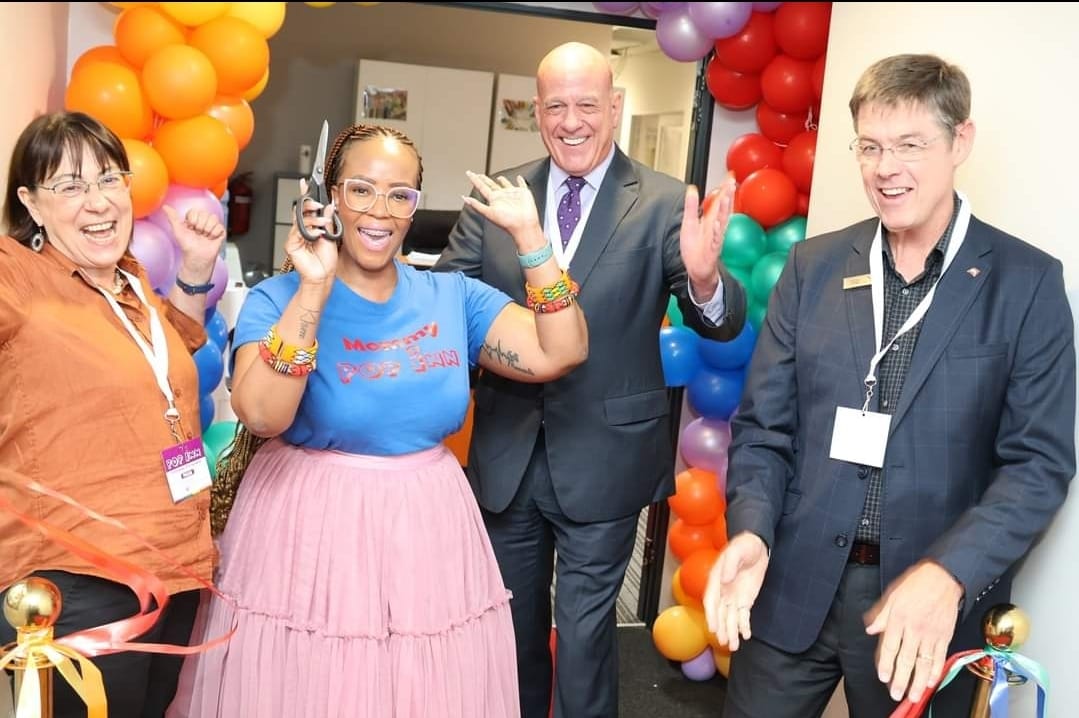
Aurum Group Chief Operating Officer, Prof Dave Clark with CDC Director, John Blandford, Key Populations Lead Helen Savva and Senior Programme Manager at Aurum POP INN, Matshidiso Chabane officially opened the newly pop in health site in Durban.
Key populations get quality healthcare with the launch of Pop Inn Clinic in Morningside
Globally, HIV prevalence among Key Populations tends to be higher in communities where legislation does not ensure their human rights, specifically where national health responses fail to ensure their right to health. High levels of prejudice and moral loading have also been shown to create barriers against accessing prevention, treatment, and other health care services.
Thus, it is a great deal for the key populations now to know that they have a safe space to call home, following the launch of POP INN Clinic on Florida Road in Durban. The clinic is run by The Aurum Institute and externally funded by The Centre for Disease Control (CDC). The clinic serves key populations, populations that are at a higher risk of HIV infection, TB and STIs. It deals specifically with men who have intercourse with men and transgender women.
According to the clinic’s project coordinator, Bathabile Nzimande, the clinic renders comprehensive services to their clientele as well as tailored services. These services include gender affirming health care for transgender women, family planning, HIV testing services (HTS), same day ARV initiation, TB screening and same day TB treatment initiation, STI screening and treatment and psychosocial assistance with a social worker who does counselling for individuals and couples. All the services are offered in house and clients are not referred to local clinics.
Nzimande said the clinic’s model affirms gender and different kinds of genders, different sexual orientations, gender identity and gender expressions. “Under our gender affirming healthcare, we have hormonal replacement therapy for transgender women,” said Nzimande.
The clinic is currently serving 42 women that are on hormones and of these women, 10 were initiated in the month of May. The clinic has an on-site doctor and two nurses that follow up with clients. The clinic not only focuses on in house treatment but also does outreach based work.
“We are based in Morningside right now and a lot of the clientele that we serve are in the communities. The townships and informal sentiments is where there is the most need and that’s also who we serve,” said Nzimande.
She highlighted that they have a mobile team that goes out into the community made up of lay counsellors and nurses. They go within the communities and provide all these services and for clients that can follow up at the clinic, they are welcome to do so.
Clients who test negative can also receive Pre-exposure prophylaxis (PrEP) at the clinic and follow up for it. Those clients who cannot come into the clinic are able to come to the client for deliveries and other monitoring services for PrEP and ARVs.
*Logan Mkhwanazi, a transgender woman who utilises the clinic says the best thing about the clinic is that all services are free. “Everything they offer is free from the condoms, lubes, and the clinic space exudes quality and takes us seriously, catering to our needs,” said Mkhwanazi.
She said other populations that don’t identify as gay, like sex workers can be assisted at the clinic, and referred to the correct channels.
According to Nzimande, the clinic sees close to 300 people monthly and they see more people with their outreach. “We are trying to cement our stakeholder engagement especially with higher institutions of learning and have been doing a lot of outreaches at DUT, UKZN and TVET colleges. We are planning on expanding on that because we realize that within higher institutions of learning, that’s where we will find our target populations because that’s where they are most comfortable to be themselves because they are in a place where they are surrounded by their peers and they are away from the stigma of the communities that they come from,” she said.
Although the clinic also serves adolescents from 16 and above, when it comes to hormonal therapy, the clinic works with consenting adults from 18 and above where an individual can sign for themselves. When a member of their key population comes into the clinic, they can expect to be greeted by someone who has gone through a similar journey to them because many of the clinic employees are key populations themselves or have gone through sensitization training to know how to serve the clinic’s population.
Nzimande concluded that the clinic has been well received in the community and there haven’t been any complaints. “For the most part people are welcoming and understanding of the work that we do and those that aren’t are more open after you educate them.”
*Not her real name
UniQ Conversations
Thabisile Gumede

UniQ Conversations Champions Social Cohesion
Uniq Conversations dialogue which was held at the Bat Centre on 7 July 2023 under the theme: Sesikhona ke Kwenziwenjani? (We are here, what now?). The dialogue was held as part of a social cohesion programme for Pride Month which included a 2km walk, entertainment and a books and crafts exhibition. The dialogue was co-hosted with the KZN Department of Sports, Arts and Culture to get views affecting the LGBTQI community and its allies.
Some of the key issues highlighted by the invited panelists include the importance of fighting hate crime, encouraging faith-based communities to be more inclusive and champion social cohesion. The aim of the dialogue was to create an enabling platform for LGBTQI community to share their stories with the intention of instilling a sense of belonging.
Menzi Mbambo, a transgender man who is going through a transition, shared his experiences of undergoing gender transition from being a woman to becoming a man. He described how he had lived in the closet for many years as a lesbian before he accepted who he was. “I needed clarity on who I wanted to become, and I had a lot of internalised anger which I processed with the help of a psychologist. Seeing a psychologist, taking hormones to reach my desired body structure has been part of my journey. I was able to see results after 3 months into my hormone treatment, but it varies according to individuals,” shared Menzi.
Mental Health Practitioner, Ndabenhle Myeza says that almost 99% of black parents in South Africa are ignorant when it comes to issues around human sexuality and its complexities as morality in the country is based on Christian theology and consciousness interpreted by a third person. Myeza urged members of the LGBTQI community to be patient with parents and communities in the fight for acceptance and integration into their communities. “Let’s be patient with parents but also be aggressive in dispensing knowledge of sexuality. Be knowledgeable about yourself, know yourself and don’t be dictated to by others,” advised Myeza.


Acting Chief Director of Cultural Affairs, Mpumelelo Nhlapho, shared the need for his department to work closely with the office of the KZN Legislature Speaker to create a synergy between departments to leave a lasting footprint in the struggle for LGBTQI+ equality. “Information sharing and understanding ourselves and empowering others is crucial. Use channels of reading and writing to express yourself and share what you have been through as an outlet,” said Dr Nhlapho.
KZN Legislature Speaker, Nontembeko Boyce says it is imperative that South Africans are guided by the Constitution which outlines human rights regardless of gender identity. To create and promote cohesive and safe communities, Boyce suggested patience with all stakeholders and an understanding that revolution releases freedom. “Let us be movers in all sectors, be the change you want to see. Create and occupy the space. Let us not show up for one another after there has been a hate crime towards a member of the LGBTQI community, but actively engage communities around us on issues of sexuality,” she said.
The dialogue is a continued effort in ensuring strengthened collaboration between government institutions, civil society, private sector and development partners to prevent and respond to all sorts of discrimination against the LGBTQI community.
Look out for more Uniq Conversations in future.
Population Policy +25 Conference
Asante Lala

Delegates attending the Population Policy +25 Conference listening attentively to issues discussed. Picture: Supplied by the Department of Social Development
Do away with one-size-fits-all programs and invite young people to decision making tables hears Population Policy +25 Conference
The Population Policy +25 conference heard that when it comes to implementing policy, the needs of the youth and inviting adolescents to decision-making tables should be prioritized. The Department of Social Development, led by Minister Lindiwe Zulu, hosted the Population Policy+25 Conference in Maropeng, a renowned World Heritage Site and the cradle of humankind.
As the birthplace of humanity, Zulu expressed her deep appreciation for this heritage site and acknowledged its importance as the backdrop for a conference that is aimed at shaping the future of South Africa’s population development.
Starting from the 11th of July to 13th July, the conference also commemorated World Population Day and celebrated the 25th anniversary of the white paper on Population Policy for South Africa. The United Nations Fund for Population Activities (UNFPA) State of the World Population Report 2023 was also launched at the conference and provided an opportunity to reflect on the progress made and establish a clear path for the future through engaging with stakeholders.
According to the department, the conference brought together population experts, community organizations, government representatives, academia, and civic leaders to deliberate on a wide range of critical topics. These discussions included South Africa’s population dynamics since 1996, gender equality, equity and empowerment of women, sexual and reproductive health and rights, sexual and reproductive justice, and migration and urbanization.
Commenting on the conference, sexual health activist Nthabiseng Mogashoe, stressed the significance of prioritizing adolescents in decision making and policy formation.
“We need to nurture a seed while it’s still growing. If we do not equip adolescents, it simply means that by 2030, the challenges we face will triple. Young people are not uniform, and we cannot implement one-size-fits-all programs when we have diversity and highly marginalized disabled and LGBTQIA+ youth. If we are serious about implementing youth policies, we will invite young people to decision-making tables,” she said.
Gugu Sihlali from the UNFPA youth advisory panel also shared similar thoughts. “Government should not assume to know what young people want, especially young women and girls. Instead, it should engage them before rushing into policy development,” she said.
Nolwethu Ndube from the We Matta organization provided a thought-provoking analysis on Comprehensive Sexual Education in households, emphasizing the importance of using accurate terminology. “By not giving sexual organs their true names, we take away from what they are and remove agency from these children. Calling body parts flowers may subject them to abuse when their uncles pick these flowers,” she said.
Addressing the critical role of boys in achieving gender equality, John Tau, a panelist from the Department of Social Development emphasized the need for Gender transformative parenting approaches. “We need to raise children equally and be mindful of how we speak to them because harmful words are internalised, informing behaviour and becoming character traits,” he said.
Lindokuhle Ndlovu, a Nelson Mandela Children’s Parliament youth ambassador, called for the inclusion of boys in creating a gender-equal society. “In all means of action to uplift society, let us include boys and men because, just like women, we also feel pain,” said Ndlovu.
The conference also unpacked vital research findings and engaged in discussions on gender equity and equality, the empowerment of women, Sexual and Reproductive Health and Rights (SRHR), Migration and Urbanization, Birth Registration in South Africa, and safety and security regarding migrants, including their implications for sustainable development and human rights.
In closing, Minister Zulu, emphasized the need to ensure that population policy messages are easily accessible to the youth and urged the population unit and stakeholders in population research to simplify information and make it readily understandable for broader consumption and implementation.
“It is important that the youth find themselves as part and parcel of the solution, simplify information to an 18-year-old to an extent that she will know that if she has more than 5 children, what the consequences of her actions would be. As we move forward, the knowledge gained and insights shared during the Population Policy +25 conference will guide our efforts in shaping a better future for South Africa,” said Zulu.
.
FEATURED
Marriage and Children

Gay Men say be financially, emotionally and mentally ready
With the legalisation of same-sex marriage in South Africa since the Civil Union Act, 2006 came into force on 30 November 2006, now we have the opportunity to address the question, “Should we get married?”
The answer to this question is complex, especially for couples who have been in committed unions for years outside of marriage. As both an institution and a relationship status, marriage signifies community, loyalty, morality, properties and inheritance, as well as social status (Yamin, 2012). Due to the plurality of public and private meanings associated with marriage, the ability to marry has immense effects on individuals in same-sex relationships.
Also, changes in laws and developments in reproductive technologies make it possible to become a parent as an openly lesbian, gay, bisexual, transgender or intersex (LGBTI) person in many countries, including South Africa. Many gay men are now openly able to make choices about whether or not to have children and, if they do wish to have children, which pathways are available to them (e.g., adoption, foster care, invitro, surrogacy etc.). However, even though the law supports their family and reproductive rights, the reproductive choices and parenting of gay men still challenges their thought processes around their choices.
In celebration of Men’s Month, UNIQ Magazine spoke to a few Gay people on their thoughts and preferences when they are planning to settle down and have their own families. We posed two questions and here are their responses:
As a Gay person, what are your three priority things to consider when deciding on a Civil Union/Marriage?
XOLANI MNCWANGO & HUBBY
XOLANI
Understanding- where you and your partner have a great understanding of each other’s character and personality, understanding of who you are, what you want and what you are willing to build.
Commitment – one needs to be highly committed to the concept of marriage in the sense that in marriage things are not always fun and nice, so when people are committed to make things work and are committed in a union, they always find a way to make things work.
Honesty – the couple entering a union needs to be very honest with each other and about each other. Honesty goes a very long way, where you are even honest about how you feel about something, and if something doesn’t sit well with you, that you are honest enough to be able to voice it and tell when you are in disagreement. Honesty is not only about your partner being honest about what they have done but about you being honest as an individual about what you want and what is it that is important to you and your marriage.
XOLANI’S HUBBY
Friendship: We need to be more than partners; we need to be friends, best friends as the base of our relationship.
Forever: Are we at a point where when we look into the future, we still see each other together- loving respecting and still caring for one other?
Life Partner: Someone who sees me for who I am and values me, my beliefs and is my spiritual anchor, someone who we can embark on a life journey together.
AYANDA BASSON
Love: You can’t get married without love, so you must be in love with your partner first.
Financial Stability: Be financially stable, do not live on paycheque, afford yourself so that you do not become a burden to your partner.
Property Owner: Someone who has their own space to stay or a car, so that when we decide to move in together, we have choices to move into one of our properties or we look for a new one.
MIYENDA MONGWE
Love & Courage: Marriage is a big step; you need to have courage to love. I come from an abusive home, so I built courage first to show love and compassion to my partner. Also ask yourself – is this the person you really love without being fictitious?
Financial Stability: Live within your means, be financially wise and be in a position where you can build your own wealth. You need to look at your finances, not what you have now but look into the future, check each other’s credit bureaus.
Commitment: Do not get married because you are in it for fun and fame but be committed and be in it for a long ride.
What are the three priority things to consider when deciding on having children as a single parent and as a couple?
XOLANI MNCWANGO
Financial stability: I do not think you will ever be financially okay to be able to raise a child, but a couple needs to be financially stable, so that you can be able to make ends meet and be able to bring a child and look after a child.
Conducive Space: You need to consider if you do have a conducive space to raise a child, raising a child in a conducive space is very important, you can’t raise a child while you are still hopping from one place to another.
Readiness: Are you ready to raise a child? One needs to be ready to raise a child.
XOLANI’s HUBBY
Financial Stability: Are we in a stable situation financially to have a child?
Love: Will we be able going to give that child love, care and spiritual support they need?
Education: Will we be able to give them quality education that will set them up for life?
AYANDA BASSON
Financial Stability: I am not a children person, but in general one should ensure that they are financially stable, this is very imperative when you bring a child or when you have a responsibility to look after somebody.
Close proximity to School: When you decide on having children, you should consider buying a property that is closer to your child’s school.
Love: Be a loving parent, be there as parent, take care of your child, be friends with them, understand them and live in the now.
MIYENDA MONGWE
Love: Adoption is an option for me, but I need to ask myself – what I would offer to a child, am I going to be a better parent, do I have enough love to give to my child?
Role Model: Am I bringing someone who will look up to me and see their hero- can they rely on me on anything?
Readiness: Am I ready to look after a child- emotionally, financially and socially?
.