
.
COVER STORY
Yaya Mavundla
Thabisile Gumede

Transgender visibility crucial in rural areas to promote education and combat discrimination
Transgender people are still very much marginalised because of lack of awareness and education.
To mark the International Transgender Day of Visibility on the 31st of March 2023, we spoke with Yaya Mavundla, an activist, publicist and reality TV star known for being at the forefront of advocating for inclusivity within the LGBTI+ community.
In terms of visibility of transgender people in South Africa, Yaya believes that although there has been a lot of visibility, there is a need for more visibility outside of the big cities especially in small cities and rural areas. “Even though there is visibility in the big cities there is a need for more education for people to understand what it means to be transgender,” said Yaya.
Some of the challenges that transgender people are faced with is that they are still very marginalised, they are hardly afforded equal work opportunities and when they do, they still get paid less and are mistreated. Yaya finds that even when working at spaces that are for LGBTI+ people and led by members of the community, transgenders still face a lot of discrimination and unfairness in working spaces. “There’s basically not much respect for transgender people within society and within the Queer community itself and I always refuse to be part of such,” she said.
Yaya strongly believes that if people were to respect Transgender people, a lot would change and be easier. Her desire to advocate for Transgender inclusivity stems from her own transition journey which began in 2013. At the time, Yaya was staying with her friend, Professor Zanele Muholi, who assisted her to find more information about being transgender as it was a term she didn’t understand. In 2021 she tried transitioning medically but there were a lot of challenges that she faced with her health due to alcohol intake that had affected her liver and she had to wait until she gets better.

Yaya’s heartfelt advice to someone who wants to transition is to follow your heart. “You need to be realistic on your current situation and do what works for you. Also, you need to do a lot of research as not everyone faces the same challenges and results aren’t the same with everyone when transitioning”.
Her clothing line, named Queer Comfort, the rang is the embodiment of fashion with a purpose. It aims to assist transgender people with access to hormones and education. Fifty percent of the profits go towards efforts that will assist those in need of accessing hormones. There are already organisations that have waiting lists of transgender people who need hormones and there are those that reach out directly to Yaya and people are identified that way. Individuals are assisted with hormone replacements and means of accessing primary education.
.
Balancing with Steve
Thabisile Gumede
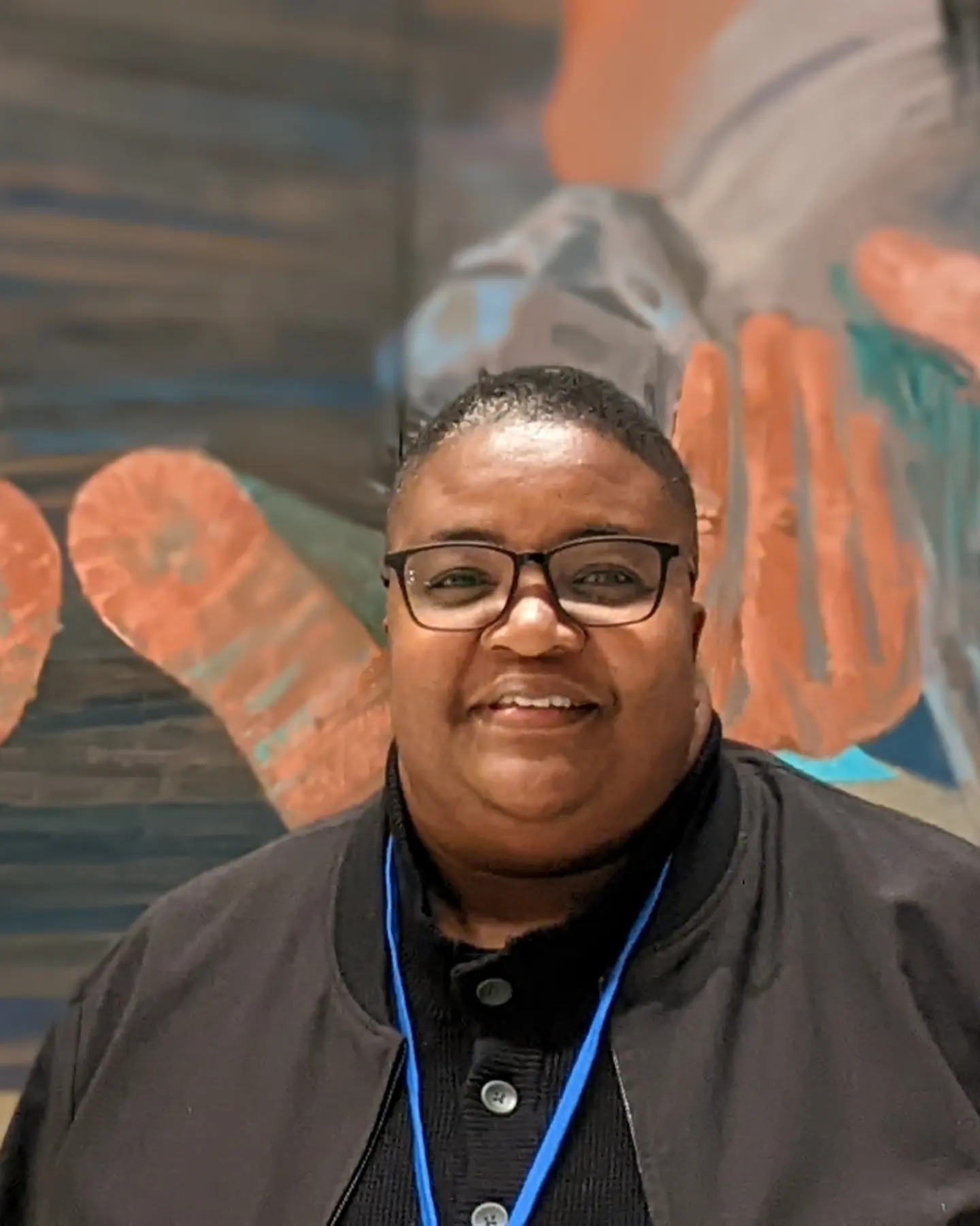
Steve navigates being a Human Rights advocate and a politician as newly appointed NEC Member
When an activist becomes a politician, society loses the former to gain the latter. The reverse is also true. There are exceptions but they are rare.
Human rights advocate and well-known LGBTI+ rights activist Mmapaseka “Steve” Letsike was appointed as a National Executive Committee (NEC) Member at the ANC Conference in December last year. The NEC of the African National Congress (ANC) is the party’s chief executive organ that is elected at the party’s national conference.


Steve is a prominent leader, with high level international policy and human rights experience for close to two decades. She does not take the appointment lightly and sees it as an opportunity to make a significant contribution to the democratic governance of the ruling party, adding to the big task of renewal and unity.
“As the first openly black lesbian woman to serve on the National Executive Committee of the ANC; that on its own demonstrates a clarion transformational, inclusive and intersectional pathway that the ANC seeks to achieve in its leadership structures that reflects broad church that is the just ANC,” she said.
Steve is determined to use her capabilities, skills and experience to represent ALL South Africans. To restore confidence in the ANC, it aims to represent all citizens, inclusive of LGBTI+ people and their experiences. Steve will play her part in encouraging the ANC to implement policies and advocate for rights that will favour the LGBTI+ community.
Balancing being a Human Rights advocate and a politician can be daunting, but Steve believes that the two should co-exist as when one leads by human rights values you are bound to exercise authority that displays good governance and reforms of democratic approaches that creates avenues for change.
Steve believes that change requires political will and that is what she is prepared for. She always aspires to lead by example and ultimately achieve the end results of economic justice and social transformation for all. As the Co-Chairperson of the South African National AIDS Council (SANAC), Steve plays a role in promoting accessibility to health benefits for LGBTI+ people without discrimination.
The Council has been consistent in its quest of non-discriminative efforts. SANAC became the first in Africa and the world to develop an LGBTI+ HIV plan, establish a Sector that seeks to ensure that LGBTI+ people have a better health seeking behaviour and access to competent and affirmative services. Steve observes that the objective now is to upscale the social behaviour change efforts to ensure that we eliminate discrimination in all grounds, in communities that seek to undermine the efforts of the Council, but most importantly that seek to undermine the Constitution.
“Attitudes in society must change. No, one should be discriminated against, and that has to be a lived reality. LGBTI+ people should be able to enjoy and access their rights without fear, everywhere they are. It must be understood that the responsibility of the Council is to ensure that South Africans lead a healthy lifestyle, that includes suppressing the viral loads, linking people to treatment and services and prevent HIV, TB and STIs, that also includes preventing any human rights violations,” explained Steve.
Steve believes that South Africa has made some great strides in promoting and implementing the rights of LGBTI+ people. “South Africa has many great examples on how a country has seemed to advance and promote the fundamental rights enshrined in the Constitution,” she said.
Nurturing good governance is essential to ensuring respect for human rights. Without the rule of law, independent courts, and other institutions of modern society – essential components of good governance – the promise of human rights may remain just that: a promise unfulfilled. “South Africa can do more and better; society can be a part of improving that effort. We should never be trapped in the idea that it is the responsibility of Government alone, all stakeholders should be aligned and heed the call of promoting and protecting the human rights of LGBTI people or any other minority groups to ensure that everyone is liberated in this beautiful country of ours,” concludes Steve.
With such a passionate advocate for human rights in the NEC, the LGBTI+ community is well represented.
.
Breaking Cultural Stereotypes
Gugu Madonsela aka Donsy Kunene
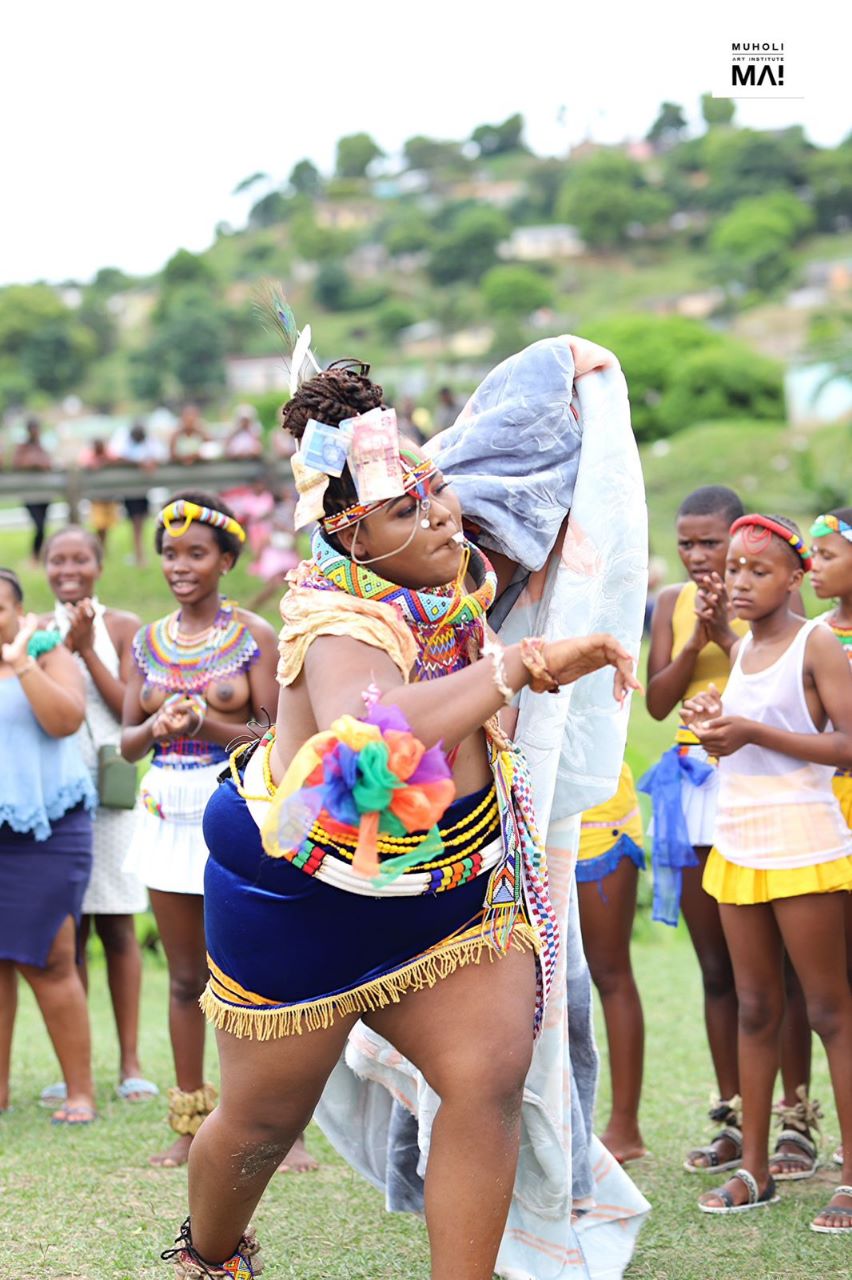
Breaking Cultural Stereotypes: Durban hosts the first ever transgender umemulo ceremony
The Director of Transhope and Activist for the rights of transgender people, Sazi Jali shares her excitement and fulfilment in finally celebrating her umemulo.
South Africa has a rich history and a diverse traditional and cultural heritage that is displayed through ceremonies and rituals. Ceremonies are simply rituals to which, through our culture or religion, we’ve attached a certain feeling of significance.
The Director of Transhope and the Activist for the rights of the transgender people, Sazi Jali shares her excitement and fulfilment in finally celebrating her umemulo. Sazi’s dream was to celebrate her transition from being a girl to womxn hood a long time ago, but she couldn’t just do it for herself because of the specific processes that needed to be followed as per her culture.
“In my culture umemulo is being organised by your parents, a ceremony where a young girl is formally transitioning to womxnhood. When my mother told me that she is ready to introduce me as a womxn to my ancestors, I was shocked. For me being re-introduced to the spiritual life and being accepted as a full womxn ready to get married was a dream come true. It gave me hope that my life will shift to a positive direction and served as a sign of a breakthrough after experiencing life’s hardships,” says Sazi.
In the Zulu culture, a ceremony that comes before umemulo is called umhlonyane which is celebrated when a girl hits puberty. Normally, this falls between her 13th and 14th birthdays. Once she reaches this age, the countdown for her umemulo begins.
For Sazi it was a different experience as her gender identity was not recognised and she never had menstruation. None the less this did not deter Sazi’s mother from fulfilling this Zulu culture as a sign to fully accept her daughter and showing her off to the public as a proud Mother.
“I always knew that my child was not a boy because from a young age, Sazi used to cry for dolls and other things which we would refuse to buy for her, but she managed to get them for herself. At some point I thought it was a phase until she started medical transitioning. From there, I had to accept that my child was turning into a young womxn and she has proven over and over that she is a womxn like any other womxn. Deciding on staging umemulo for her was then not a difficult thing for me to do,” said Sazi’s Mother.
Sazi says the support she received from her mother and Professor Zanele Muholi, whom she regards as a father figure in her life was overwhelming. She says there’s is no amount of hate speech, misgendering, derogatory statements, misconceptions and misjudging received from Isolezwe through their journalist Mbali Khanyile, that will dampen her pride and joy of being a woman that she is.
“I am forever indebted to Prof. Zanele Muholi for being there giving my mother support to ensure that I have a beautiful and meaningful ceremony. To me the ceremony taught me that as human beings, we have the ability to look at our own very unique life paths and create our own rituals and ceremonies, based on what we need. We all have the resources within us to create ceremonies that fit our order of existence. Trust in your abilities to know what is right for you and block the noise,” says Sazi.


Here is how Sazi’s ceremony went down as per her family’s unique way of doing things for her:
Conventionally, chastity is a highly valued virtue for those undergoing the umemulo ceremony. However, it is not mandatory. Luckily for Sazi this process of cleansing was not a difficult phase for her as she was not sexually active with her partner due to challenges, they had in their relationship.
Narrating the process to UNIQ Magazine SA, Sazi said, a month before the ceremony, she visited Gogo Mthethwa who has a group of girls that undergo virginity testing, she asked for her to come and be part of the ceremony. Gogo Mthethwa was instrumental in guiding Sazi and the family on how things should be done and agreed to be part of the ceremony. During that month Sazi and the girls would gather and rehearse songs and dance moves for the big day. Sazi says because she is a queer person, she asked her friend who is also a queer Le Sishi to be one of her maidens (izimpelesi). She further said in her eyes it was only befitting for her to choose trans womxn and cisgender womxn to be her maidens as her gesture to display and encourage diversity of womxn within the transgender community.
During the 11th week they started to invite people in a cultural way – door to door. Then the process of collecting umkhonto kwaMalume followed. The week of umgonqo took place where they isolated themselves from everyone. During this week anyone who wants to speak to them had to pay some money to get them talking.
On a Thursday the same week, the goat was slaughtered to formally inform the ancestors of the coming ceremony day. On Friday the cow was slaughtered to give Sazi the permission to get out of umgonqo and mingle with people. Instead, she found herself going straight back to umgonqo which she found very funny considering that she was earlier frustrated by being confined in the room for days.
Then there was an over-night camp with the girls. Boys came in and broke umgoqo as part of the procedure where people can come and talk to the girls freely to avoid falling asleep. At 3am they went to the river after burning all the clothes they were wearing, to go bath and remove ibomvu. She says running naked was really scary, but they did it anyway. They went back home and stayed outside until midday at 12h00 when they went in to collect umkhonto and she wore umhlwehle. By then it was time to go to esigcawini for the actual celebration.
Catering was provided by Transhope while décor was stunningly done by Onella Events.
.
A Multi- talented Business Coach
Thabisile Gumede
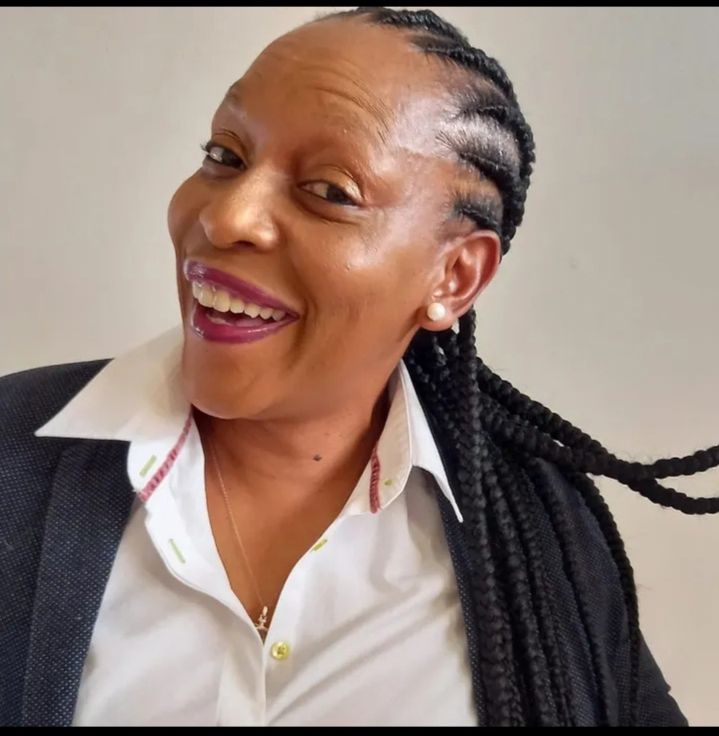
Coach Portia – a driven and multi-talented business coach
Even though women often have limited access to finance, black female entrepreneurs are growing in numbers, with many starting their own businesses to seize a gap in the market.
If you ever feel discouraged or in need of inspiration, look no further than Portia Nonhlanhla Dludlu – Siska, popularly known as Start-up Coach Portia who took a leap of faith and now runs her own business.
Today Portia is a respected Trainer, Coach and Mentor for start-up small businesses. She has a training company, Panther Edge Coaching SA that focuses on business skills and mentoring various companies to help them realise their goals.
Portia comes from humble beginnings having been raised in the rural area of Bergville, in a small mission called Hambrook. She grew up farming and looking after cows with her grandmother and her sisters. She started her first business at the age of 14 years – fixing bicycles and morning bread delivery. “I used to run to the shop, cycle to school, I had mini tuckshop at my desk at school selling quarter jam and atchar. My family was a strong support for the community, supplying milk and mealie meal. I was my grandmom’s right hand when it came to farming and church things,” recalls Portia.
Although her upbringing was nurturing and loving, Portia always told herself that she may grow up in the farm but she wanted more for herself. When she sets a goal, Portia makes sure she gets it done. She doesn’t give up easily. It is this determination which led her to becoming the first female fire fighter in KZN. In her endeavour to save lives and be of service, in 1998 she became a Class IV rescue scuba diver.
Her life took a different turn when she later left the Fire Brigade to study Sports Science at the University of Durban Westville because she was passionate about sports. She studied through sports bursaries and has travelled 11 countries overseas through sport. She has won several medals for Running, Cycling, Swimming and Rugby. She later worked as the Head of Sports at the Stellenbosch Municipality. Whilst working there she realised that people often sabotage themselves and studied Consciousness Coaching in Germany to equip herself so she could empower her team.
Little did she know that in 2006 she would leave the municipality to study Consciousness Coaching full time and make a career out of it. She felt the need to coach people and guide them on how to better themselves and make a difference.
She founded Panther Edge Coaching SA and Libunjwa Liseva Development. Portia has been coaching now for almost 16 years and is still passionate about what she does best and she does not regret transitioning from her sporting career to business.
The most satisfying aspect of her career is seeing businesses coached by her grow and thrive.
As a lesbian businesswoman, Portia wants to show the world that she is not her sexual orientation, she is a professional as she does not discriminate against her clients based on their sexual orientation, she sees their business ideas. “People must look beyond our sexuality and see us as human beings and as professionals. We may be gay lesbian or transgender but that is not what does the work, it is our skill and drive and love for people. People should see me as a professional and not judge me based on my sexual orientation.”
What gets Portia out of bed every day is her passion and commitment for Small Business Development, she believes that small business plays a central role in the economy, and they need to be supported to be sustainable and productive so that they can contribute positively to economic growth. “I always saw myself as a success, I have goals for myself, and I am driven. I didn’t want to perpetuate the cycle of poverty that I grew up in. I want to achieve greater things in life,” says a determined Portia.
Portia’s typical day starts at 4am when she gets up. She drinks her coffee, reads, meditates, showers and starts her first online session at 5am. At 6am she goes to the gym and starts her daily grind of following through with customers, writing material and preparing for afternoon radio sessions. Some days she has seminars to attend or presentations to do. In the evenings she walks her dogs, prepares dinner, does a radio session and is usually in bed by 9pm.
In her leisure time she likes to exercise or go for a walk or spend time with family playing board games or having a braai or swimming. She enjoys doing mini-DIY projects around the house and loves to fix things.
Portia has experienced significant barriers in business because of being a female. Some deals were beyond her reach because she was either coerced to pay a bribe or sleep with someone to get ahead. “My body is not for sale. I want to get deals because my company is experienced enough to get the deal, she said”
Portia is in the process of building the first rural entrepreneurial school/incubator to bring out entrepreneurs from rural area and townships and harness their skills. She will have two in the rural areas and two in the township. The first one will be live in March 2023. She also endeavours to coach 2000 businesses and mentor 100 girls before they finish high school and motivate youth participation in sports. Her ultimate mission is to inspire individuals to unleash their best potential regardless of their upbringing and background.
Her advice to the next generation of future leaders is to have a conviction; stand for something. Be clear about your intentions. Don’t be afraid to ask for help. Do not be intimidated by anyone or your sexuality. Strive to leave this world better. Let’s create a safe environment for future generations and lead financially.
To get in touch with Portia:
www.libunjwa.co.za
@libunjwa_liseva
@startup_coachportia
FB page- Coach Portia
FB personal: Portia Dludlu
Cell: 083 623 8587
Mixed reaction over the “head boy and “head girl” concepts
Asante Lala
March / April Issue
“It is about time we build an inclusive education system that will protect learners from LGBTI+ community” – The Foundation for Education and Social Justice Africa.
In an article by The Star, at the beginning of the year, the foundation openly said concepts such as “head boy” and “head girl” discriminate against pupils who do not identify as male or female, excluding them from participating in leadership structures in schools.
KZN Education Spokesperson Muzi Mahlambi commenting on the matter, said that education by its nature of name is dynamic and it evolves. “The views that are being echoed are not far from the truth and what is obtained in the society of the school is that the microcosm of their narrative/argument is constitutionally based.
What is left is to agree on the modality to do it,” said Mahlambi.
The call for abolition of such concepts by the foundation attracted mixed reactions from the public in social media platforms. UNIQ Magazine SA took to the streets to hear the different views of the public on the issue.

This is what members of the community had to say:
Phumlani Simamane, a right-wing conservative
said he is very disappointed in this. “The Department has so many other higher priorities, but they are busy wanting to have unisex toilets and now LGBTI+. I’m not in favor of this and totally opposed to it. As long as we still have children out there who have disabilities, children out there who don’t have learning facilities, access to quality education and then the department wants to put this up as something that must happen?
No, they must just leave us alone,” said Simamane.
Lethu Matola, said that the gender topic is going to create issues with our kids looking at the direction it’s headed. It also creates problems for people who haven’t accepted the idea that some people feel very pressured into being male or female and prefer being identified as they or them. “If we are implementing it in schools, it feels as though we are forcing the topic for gender to be taught in such a way that there is no girl, there is no boy and just a head person Head boy and head girl helps because it motivates both sexes to be the head unless an individual refuses personally to be identified or gender specific,” said Matola.
Poet and author, Thando Fuze said that if we are trying to move forward as a country, the systems need to be dismantled from the foundation phase. “Education on gender, gender fluidity and gender equality need to start with our children who by the way, in most cases, are not the issue but are influenced by their elders. Doing away with these kinds of labels will empower young girls to compete (healthily) on the same level as and with their male counterparts, without feeling as though they need to overcompensate for their achievements. Furthermore, this will definitely build their confidence moving into the ‘real world’,” said Fuze.
.
Complexities of growing up as a non-binary teen
Sinothi Ngonyama
March / April Issue
As we commemorate Human Rights Day and Teen’s Day in the month of March, we spoke to a young non-binary teen. This is what they had to say on the complexities of growing up non-binary.
Growing up, I never felt as though being homosexual was forbidden, some of my mom’s friends who identified as gay would come to the house regularly, so it was normal for me to see people comfortable in their skin. I was about seven when I wanted to stop wearing dresses, skirts etc, I just did not feel comfortable in them. My mom then let me pick whatever clothes I wanted to wear, and that’s when I started my “tomboy phase” as my family members would call it.
When I was twelve, I started questioning my sexuality. “Am I gay? Do I like girls and boys? Do I want to be a boy?” With questions like this, I did a lot of introspection and for about a year I had come to the conclusion that I liked boys and girls because my older cousins were always talking about how they would protect me from any boys who broke my heart, so, I assumed that I had to like boys, so liking boys and girls was easier for me to explain to them.
After my 13th birthday I was questioning myself again, this time unsure about the fact that I liked boys, because I had crushes on only girls. I then kind of realized that I liked girls, after a bit of research I found out that the term they used was Lesbian. I did a lot of research just trying to understand myself. In doing my research I came across the term “non-binary”, and I remember feeling relief, that I’m not the only person who doesn’t want to be confined by my gender.
Something that I will always be grateful for is my mom, who does not make me feel uncomfortable because of my choice in sexuality, she understands that love is love whether it is with a cis-gender couple or a homosexual couple, she has always supported and loved me loud, my little sister makes it a point to wish me a happy pride month on the first of June. Last year she made me a pride month flag. Despite all the support I get from my mom and sister, there will always be people who don’t support or agree with my preferences.

My cousin is homophobic and doesn’t believe that men should be with men or that women should be with women. That has always been a worry of mine, that my preferences will create tension between me and the people that I care about. I think that the world is changing, and people are not afraid to be themselves anymore. Growing up, the adults in my life were always welcoming and understanding. I just hope that other non-binary kids like me can have that kind of support and love, I hope to see other kids loving and embracing themselves.
In South Africa, topics on sexuality have always been taboo and violence has always been a way for people who don’t agree with it to show their disapproval. I think that the government could enforce stricter laws around gender-based violence and create a safe space for people who just want to be themselves. I want people who identify as non-binary to know that it is more than okay to not want to conform to gender norms, you can be you and you don’t have to put a label on yourself.
Durban ICC introduced gender neutral toilets, a win for the LGBTI+ community
Asante Lala
March / April Issue
In the making of history, Durban ICC becomes the first venue in eThekwini to offer gender neutral toilets, marking a small win for the LGBTQI+ community.
When it comes to LGBTQI+ community matters, the subject of gender-neutral toilets has been met with different opinions from different spheres of South Africa. Recently, the Inkosi Albert Luthuli International Convention Centre announced that it would be introducing gender neutral toilets at its award-winning facility in Durban. According to the ICC’s Acting Marketing and Communication Manager, Sandile Makhanya, the decision to have the gender-neutral toilets at the Durban ICC was to cater for people who for many reasons feel uncomfortable using a toilet that is designated for either males or females. The gender-neutral toilets are for those who identify as non-binary (neither male nor female) giving them access to gender neutral toilets at the Durban ICC. The Durban ICC also has Asian toilets as well as prayer rooms for both males and females throughout the center,”said Makhanya emphasizing that the venue is accommodating to everyone.
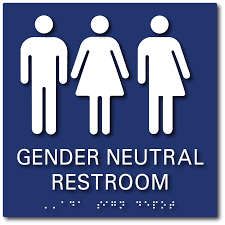
The gender neutral toilets were launched in October 2022 and are currently in operation. The convention revealed that it converted two existing toilets into gender neutral toilets at the internationally acclaimed venue, which is a first in the port city of Durban. Makhanya reiterated that Durban ICC has over 30 gendered toilets to accommodate everyone, only two toilets have been converted to gender neutral and therefore gendered toilets will not be affected. Commenting on the ICC designating gender neutral toilets, Umlazi activist and community leader, Sabelo Ngema, said every person deserves privacy when it comes to his or her choice. “We are in a democratic country and guided by the constitution and the rights of all people who live in it. I don’t see a problem if they have made a provision for those who are transgender to have privacy of choice,” said Ngema.
Businesswoman and trained educator, ZamaNguni Mzimela, said that as a heterosexual female, she wouldn’t be comfortable in sharing a toilet with males especially considering the high incidents of rape in the country.
“It would be strange for me to walk inside a toilet and find a male. You will get males who will use toilets to commit crimes. For example, there was an incident with a guy who raped a child in the toilets at Spur. Imagine if he could do that at Spur whilst it’s busy, imagine if he could do that at the toilets at the ICC during an event. Maybe they could have males, females and neutral ones and if you’re comfortable with using a neutral one, use that one,” she said.
Ethekwini SANCO Regional member, Samkelo Matshetsha, said, Chapter 2 in the country’s Constitution allows people to act according to their beliefs and exercise their human rights. “The preamble of our constitution says, ‘South Africa belongs to all who live in it’, it is upon us all that we create a conducive environment for all – that we help the government to advance the Agenda of a non-racial, non-sexist and free society. The recent crime stats are very much alarming with the increase of cases of gender-based violence. Transgenders are also part of a segment of our community that needs to be protected and be afforded full rights like everyone else,” he said.
.
.