COVER STORY
Nonhlanhla Mkhize
Thabisile Gumede
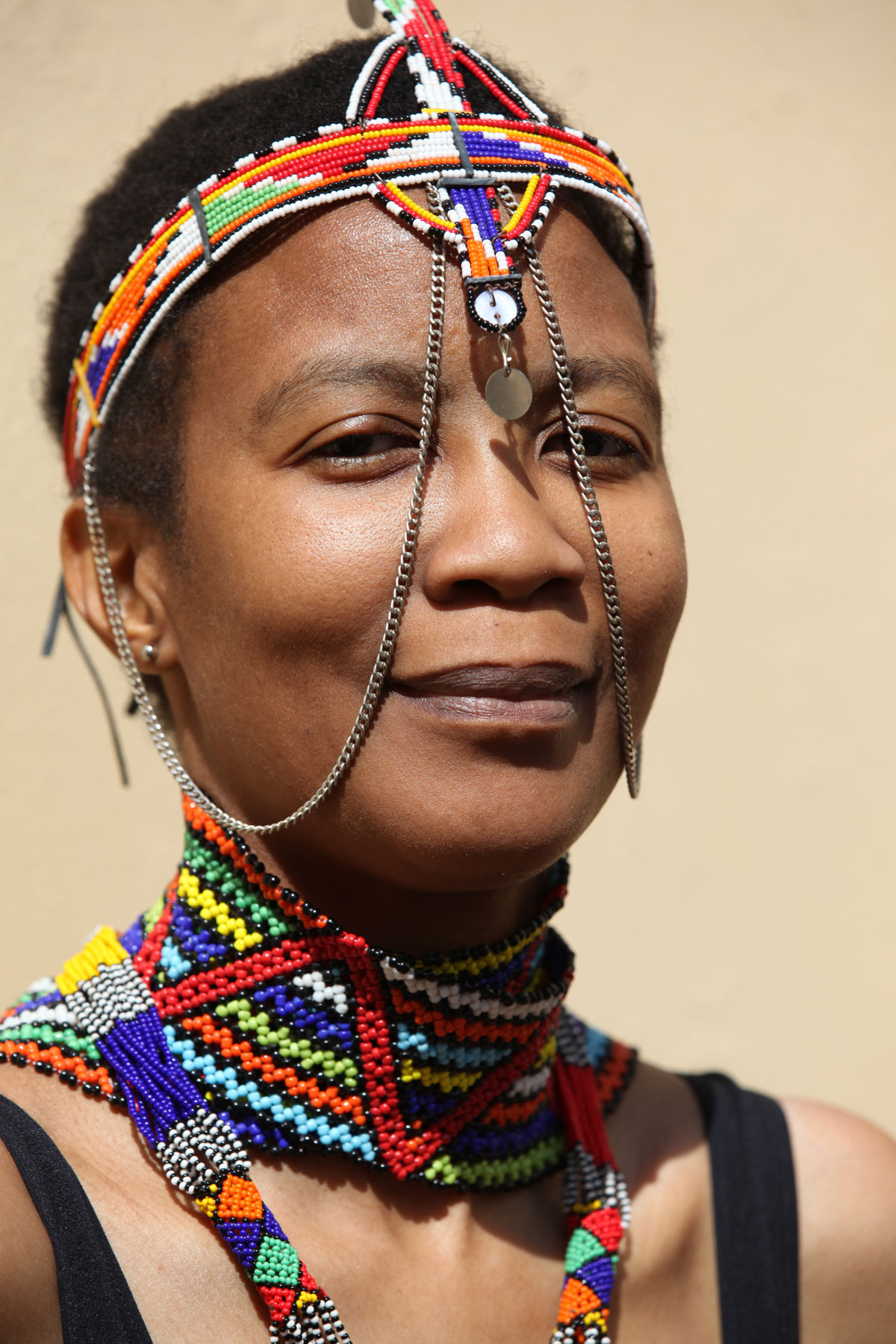
Nonhlanhla Mkhize is an experienced factotum in the LGBTQ community
Nonhlanhla “MC” Mkhize, is a human rights defender and social anthropologist. As an advocate for humanity, Nohlanhla is excited about and therefore involves herself in a variety of activities. Primarily she educates about, supports and defends human rights – however, when she can’t, or has limited to no resource; she reaches out for help.
She has been associated with the Lesbian and Gay Community and Health Centre as its Manager, Executive Director and now Technical Lead throughout KZN since 2001. The Centre is an NGO that provides a safe and secure space for lesbian, transgender, gay, bisexual and intersex communities in Durban and KwaZulu-Natal. Nonhlanhla became a factotum due to funding constraints over time which meant adapting and adding other roles such as Human Rights Educator, Advocacy Officer, Marketing, Researcher, Monitoring & Evaluation, Human Resource as well as distributing condoms, delivering treatments during Covid-19, doing door-to-door visits, providing care, etc.
Since 2006 to date, she has been a Member, Treasurer and Chairperson of Amnesty International South Africa – Durban Chapter; Coordinates Durban Pride Liberation March, provide support to various LGBTI, Youth, Women, Children and Business e.g., the Gay and Lesbian Film Festival, KZN Gay and Lesbian Tourism, and is affiliated to a number of structures such as the KZN Network on Violence Against Women, Children’s Rights Centre, Active Citizens Movement, Climate Change, etc.
What many may not know about Mkhize is what or who have been the influential characters in her life and what motivates her to carry out all these important and enormous humanitarian tasks.
Mkhize grew up in Hammarsdale known as Mpumalanga Township. She describes her family as small yet large, as it was not your typical mom and dad and children set up, but rather a family of two homesteads – one belonging to her great grandparents and the other comprising of her grandparents, mom, aunt, two uncles, and two siblings.
As a result, it took her a while to realise she was the first born to her mother as she was the last for a while during critical formative years. “The setting was such that as children we did not just belong to our immediate or primary families, but were raised by the community. We respected all elders, ran errands and were reprimanded by anyone who felt you had erred. We therefore played, learned, were naughty, went to school and church together,” recalls Mkhize.


Her Primary Education was at Mpumalanga (eNtendeleni and oKhozini) and she completed her High School years at Sacred Heart Convent in Verulam where they were indoctrinated with religious studies as well as languages, science, accounting, business, fine arts, life skills, etc. She studied Anthropology, Law, Psychology and Public Health at UND/UKZN and HIV & Youth Development at UNISA.
Mkhize was raised primarily by a generation of conservative, modest, religious elders who did everything they could to make ends meet by making the most of the little there was. Her uncles and aunts used their own skills and talents to make a living. Education, while important, was regarded as equally important as community service. Education and discipline were key and so were notions of selflessness, striving for excellence, putting others before you, and sharing what you have with those less fortunate. These were the attributes that Nonhlanhla aspired to reflect and still practices to this day.
Nonhlanhla regards her strongest influencers in life as her grandmother and great grandparents who groomed her behaviour. The late Ronald Louw and Pius Langa were her ethics, politics and law mentors. “I’m a student of the world, so lessons from the people I meet, work with, the communities whose lives we seek to improve – all inspire and influence me in many ways,” observes Mkhize.
Passionate about Community Services and Social Engagement, Mkhize is most proud of what human rights movements have accomplished for key and vulnerable groups at this point in our lives, such as the 1996 Decriminalisation of sex among consenting adults, an inclusive definition of family, emancipation of women, improved sexual and reproductive health and rights programmes – including access to ART, to the 2006 Marriage Equality, and now comprehensive definition of rape, inclusive learning spaces, Gender Marker changes, Hate Crime and Hate Speech Bill, and hopefully soon the decriminalisation of Sex Work to mention but a few.


A typical home body, Mkhize’s idea of leisure time is doing household chores and DIY projects. Given a chance to do things differently, Nonhlanhla says she would invest more energy in creating safe spaces and recreational activities (towards job creation, safety and improved physical and mental wellness).
One problem in the world she hopes to see solved within her lifetime is identifying and implementing practical solutions to minimise mental illness. We are not okay as a society, and she believes talking about it is one solution, but we can explore other, more sustainable and progressive methods.
Mkhize’s vision for the future is one where we share memories, capture lived experiences and learnings about life into readable form, podcasts or short films/documentaries so that we tell before we die, lest others, future generations forget and perhaps even repeat our mistakes.
.
TRENDING
Celebrating Bi Visibility Day
Sibu Shangase
Celebrating Bi Visibility Day: Embracing the Spectrum of Love
As September unfolds its vibrant hues, the LGBTQ+ community comes together to celebrate Bi Visibility Day on the 23rd. This day serves as a powerful reminder of the importance of recognizing and celebrating bisexual individuals, whose experiences and identities enrich the tapestry of queer culture. Let us dive into the significance of this day and why it’s crucial to amplify the voices of bisexual individuals.
Bi Visibility Day, also known as International Celebrate Bisexuality Day, was first observed in 1999. Its aim is to raise awareness about the issues faced by bisexual individuals, combat biphobia, and celebrate the beauty of love in all its forms. It’s a day that fosters inclusivity within the LGBTQ+ community, recognizing that bisexuality is a valid and important part of the queer experience.
One of the key challenges faced by bisexual individuals is the perpetuation of harmful stereotypes. Bisexuality is often misunderstood or misrepresented, with some misconceptions assuming it to be a transitional phase or a mere desire for attention. Bi Visibility Day provides an opportunity to challenge these stereotypes and promote an understanding of the fluidity and diversity of human sexuality.


Visibility plays a pivotal role in normalizing diverse sexual orientations. By acknowledging and celebrating bisexuality, we foster a sense of belonging and acceptance for bisexual individuals. Representation in media, politics, and everyday life is crucial in creating a world where everyone, regardless of their sexual orientation, feels seen, heard, and valued.
Bi Visibility Day also emphasizes the intersectionality of sexual orientation with other aspects of identity. Bisexual individuals, like anyone else, can belong to various ethnic, racial, religious, and cultural backgrounds. Recognizing this intersectionality is essential in advocating for inclusivity and dismantling systems of discrimination that affect LGBTQ+ individuals.
Visibility and acceptance have a direct impact on the mental health and well-being of bisexual individuals. Combatting the stigma surrounding bisexuality can lead to decreased rates of depression, anxiety, and other mental health challenges faced by this community. By fostering a supportive environment, we contribute to a happier, healthier society for all.
Bi Visibility Day is not only a celebration of bisexual individuals but a testament to the strength and resilience of the entire LGBTQ+ community. It serves as a call to action, urging us to continue the work of creating a world where everyone can love and express themselves freely. By recognizing and celebrating bisexuality, we take another step towards a more inclusive and accepting society for all. Happy Bi Visibility Day! 🌈
JOMBA!
Thabisile Gumede

2023 Contemporary Dance Experience champions inclusive dance forms
The University of KwaZulu-Natal’s Centre for Creative Arts’ JOMBA! Contemporary Dance Experience celebrated its 25th anniversary this year. JOMBA! 2023 offered dance fans a treat of 13 days of world class contemporary dance that saw local and international dance makers converge in Durban. From 29 August to 10 September, JOMBA! hosted artists from Mozambique, Switzerland, the Netherlands, Madagascar, Uganda, Romania, Germany, UK, Brazil and of course the very best of South African talent.
The duration of the dance experience offered performances, workshops, panel discussions and virtual screen dance. At this festival, dance makers were invited to reimagine their – and our – relationship with ideas of belonging (and arriving) and our varying (in)tangible heritages.
This year’s JOMBA! 2023 opening featured Mamela Nyamza’s Hatched Ensemble as Nyamza was this year’s JOMBA! 2023 Legacy Artist. Hatched Ensemble powerfully conveys challenging issues of tradition. It incorporates classical ballet with contemporary dance, along with opera and African instrumental sounds which deconstruct the binaries of traditional African dance forms and Western balletic norms.
Hatched Ensemble is motivated by Nyamza’s highly acclaimed solo work “Hatched” (2007), an autobiographical work in which she reflects on her life as a black, queer dancer.
“Hatched Ensemble speaks to anyone who has felt conflicted about their own identity and where they belong in the status quo,” said Nyamza. The dance piece relays a message to the audience on the need to free oneself from oppression and “hatch out” in your true identity.

Provocatively titled, Archiving History and Memory: 25 Years of the JOMBA! Contemporary Dance Experience, edited by Tammy Ballantyne Webber, the book places emphasis on offering a poetic user-friendly archive of the 25 years of JOMBA!’s history and legacy.
“The book is especially significant in remembering African creative histories in a time when forgotten Southern-based archives are being politicised in decolonial frameworks,” says Dr Lliane Loots, Curator and Artistic Director of JOMBA!. “This book is offered as an archival project that holds an activist agenda and fights for carefully and methodically curated creative African histories to be remembered and honoured.”
The book is available to purchase, contact
tammyb@artslink.co.za at The Ar(t)chive for sales and information.
.
FEATURED
Wake up and Make-up!
Sandy Nene
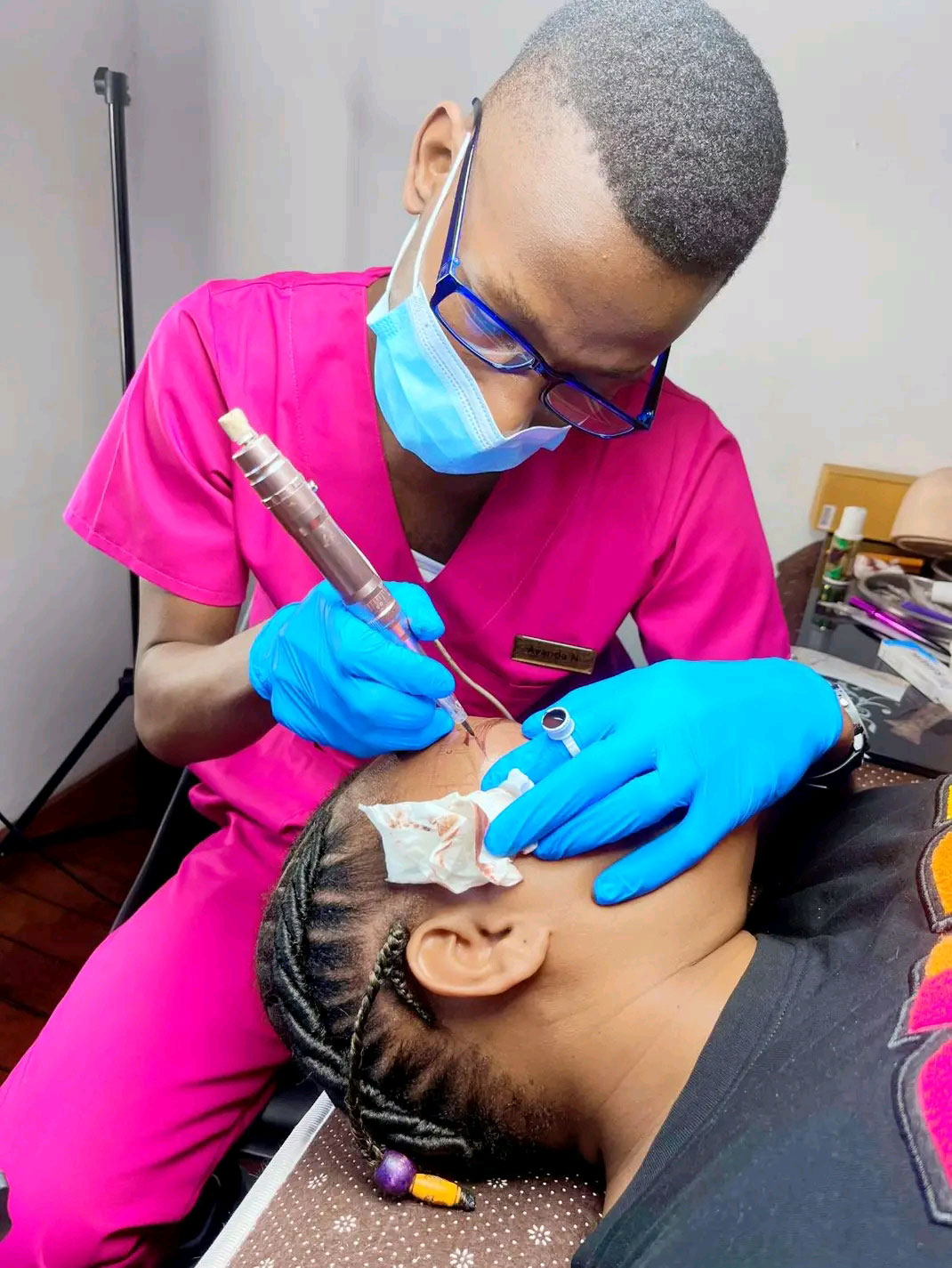
From being a local hairdresser to a Brilliant Makeup Artist
Over the decades, makeup has evolved to be an integral part of expression, dressing up, marriages, other formal and informal events and the entertainment industry. You may think that teaching yourself new skills is a waste of time. But it’s the total opposite. It shows that you are disciplined and able to motivate yourself when faced with a task. Port Shepstone born and talented Xolani Ndovela famously known as Madame Ayo, shared his passion with UNIQ Magazine and how he is ready to share his skills with other ambitious young people like him.
Madame Ayo has made his name in the makeup industry through social media, where he is showcasing his stunning talent. Coming from a difficult background, as a first born among 3 other siblings, Madame Ayo was forced to find ways of earning an income so he would support his mother at home.
He started his schooling at Enkoneni Primary School and matriculated at Bheki Secondary School. From high school Madame Ayo had piece jobs of doing hair around the area he lived in and that really helped, he says it made him really proud that he could assist since he was raised by a single parent. He has not worked outside the beauty industry, and he loves it and does not see himself being anywhere else, he just wants to keep inspiring more and teach more on permanent makeup.
“Makeup boosts self-esteem, which is closely related to confidence. When we look good, we feel good, and our self-esteem gets a boost. This can help us feel more confident in our abilities and more comfortable in social situations. This is exactly the reason I love what I do because it contributes to my client’s wellbeing and self-confidence. When my clients call me and share some good reviews, I feel complete” says Ayo.
Imagine turning your favourite hobby or self-taught skills into a career. Although it may sound too good to be true, it really is possible. Madame Ayo is proof that your tenacity and ability to learn and improve allows you to perfect this skill.
Madame Ayo, said, though he didn’t study beauty, he made it his job to upskill himself by enrolling on a few courses to sharpen his abilities and he has even bagged a few awards along his entrepreneurship journey.
His message to young people including the queer community: “Take your time with everything, don’t let the pressure get to you, don’t allow yourself to lose the person you are to make other people feel better” he concludes.


.
Healing the Nation
Sandy Nene
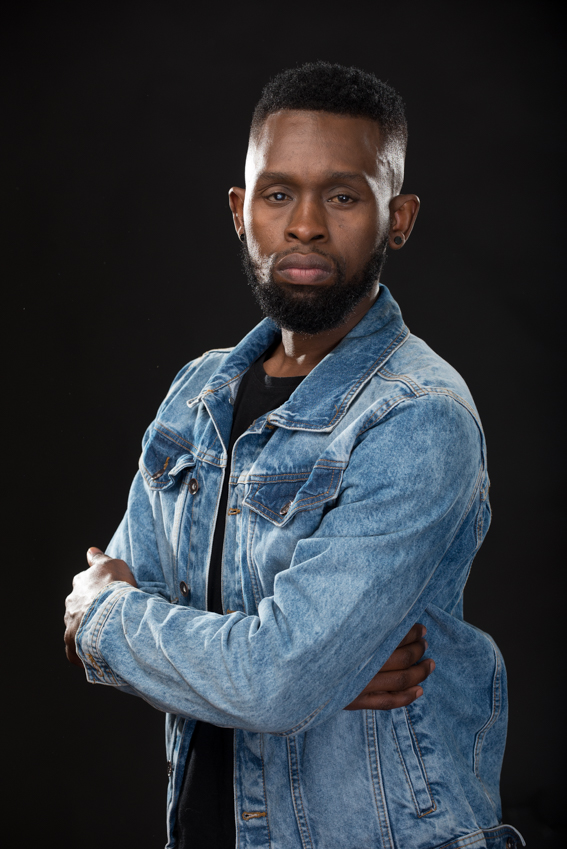
Healing the nation through his calling – Tsediso Kabulu
On our ONE ON ONE WITH SANDY, we have Tsediso Kabulu, a choreographer and theatre practitioner.
Tell us about your early life and the schools you attended
Welkom Prep (Primary), Welkom High School and University of the Free State where I obtained a Bachelor of Science Degree in Biology and Statistics – graduated 2012.
What happened after graduating?
I started performing and choreographing at different places, events and venues across the country between 2012 to 2015. I then began touring internationally, I was in the United Kingdom from 2016 to 2017. International tour inspired me to open my own company Makata Kreative Productions in 2017. I was also lucky to have been invited to work in USA as a guest choreographer from 2018-2019.
Why did you choose this career?
It wasn’t a choice as such, but it was me answering to my calling. Performing arts and being a theatre practitioner to me is a spiritual way to bring healing to the globe in various forms. Performing arts is an opportunity to explore, recreate, evolve and reenact situations using different perspectives to drive conversations or to reach a conclusion. It helps me find meaning in life and create engaging works.
Describe your lifestyle, what makes it unique?
I’m a grounded person, who loves exploring, learning and finding similarities within our unique differences as humans. I love socializing and engaging in life-changing conversations. My love for traveling helps me broaden my vision of life, intentional thinking, information processing as I evolve as a human. My spiritual journey helps me navigate my sense of being and who I am. It enables me to make sense of unseen and unexplained things and also love life above materialistic things it offers.


Challenges you face everyday?
Finding centredness with everyday changes and phases. Consistency within all areas of my life and not allowing what happens outside my body and the world to pile-up unnecessary energies that won’t amount to anything good in the end.
How do you overcome them?
Grounding – assuring myself that I belong and that everything happens for a reason and a season. I’m honest to myself and I allow emotions to inspire me to think and not think with my emotions – there’s a huge difference. I meditate if I’m anxious, I journal when I’m overthinking or unclear and I read if I’m burnt out or uninspired.
Your message to a young member of the LGBTQI+ community
Live life in the moment. Accept the things you can’t change about yourself and embrace your unique difference to the next person. Let intention be a big decision – maker in your life and you alone are enough.
Living Life Positively
Sandy Nene
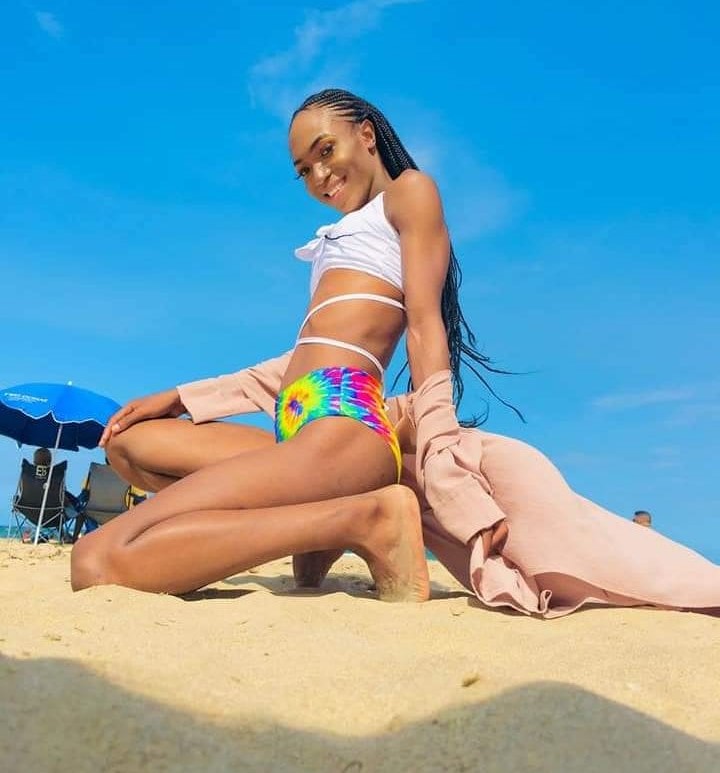
Living her life positively the way she wants – Yonce
On our ONE ON ONE WITH SANDY, we have Ayanda Ndlovu affectionately known as Yonce the Tiktoker and professional Makeup Artist.
Who is Yonce?
Yonce is a 26-year-old Tiktoker and a Makeup Artist, born in Umlazi Durban based in Johannesburg. I attended primary school at Vumokuhle Junior Primary School then I did my high school at Mhawu High where I completed my matric. I’m a very bubbly person who enjoys going out to socialize, meet new people, I’m all about positive vibes. I think being true to myself makes me unique because a lot of people lie to themselves and end up losing themselves.
What did you do after school and when did you take your makeup business seriously?
After school I started taking my makeup business seriously, I opened a salon but due to lockdown things were hard to operate but I am a professional makeup artist. In 2019 I went to study Tourism Management for a year at Swinton College. I realised it is not what I want, I then moved to Johannesburg to pursue my career in acting and modelling. I am currently under an agency.


Tell us about Yonce the Queer
It is very challenging to be a Queer/Trans person, because society describes you as per your outlook. They don’t know the real you and they do not care how you identify and your pronouns. You always get to be judged according to the scriptures in the Bible not according to the person you truly are.
How do you overcome the challenges?
I ignore negativity and choose myself and my peace.
A message to a young Queer:
Mtase, as a young LGBTQ+ member you must first accept yourself, never let someone else tell you who you are, make them feel your presence whenever you step in the place, be you!
.
EDITOR’S PICK
The Double Minority Effect
Gugu Madonsela
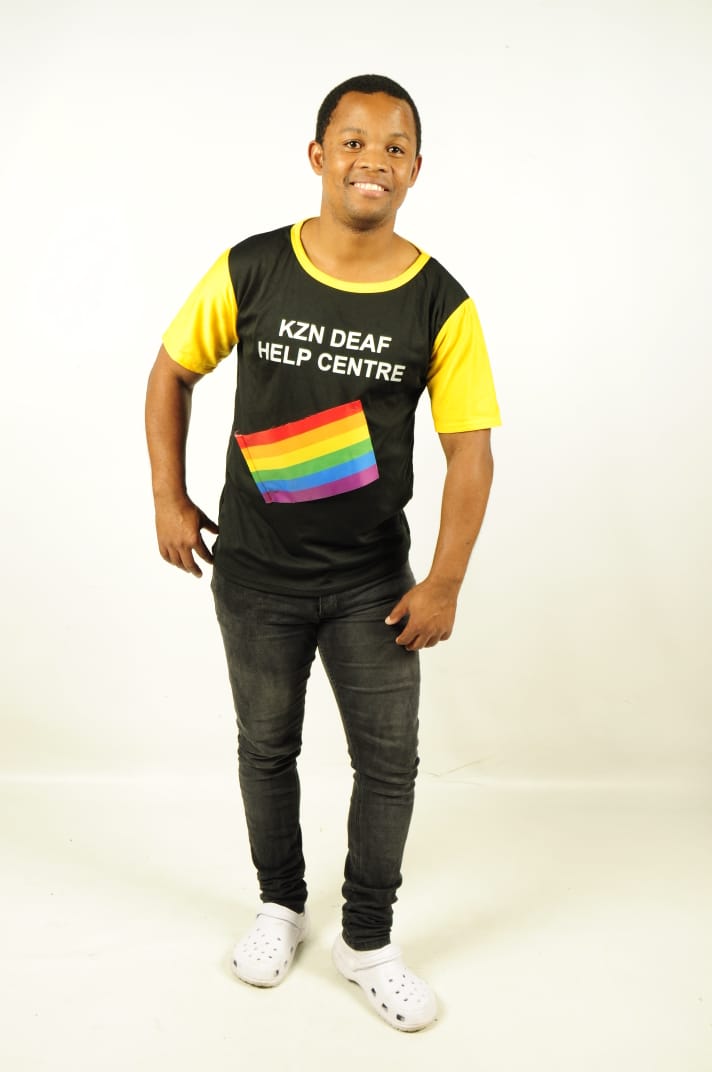
The struggles of identifying as DEAF and LGBTQI+
In honour of the deaf awareness month to raise South African Sign Language (SASL), UNIQ Magazine SA is highlighting some of the challenges faced by the deaf and queer community.
Apartheid, poverty, unemployment, and inequality have all had a huge impact on the social challenges South Africa continue to face today. It becomes even a nightmare if you are deaf and identify as homosexual in a country that claims to be inclusive and democratic.
There is still a lot of discrimination towards deaf people and their culture, caused mainly by lack of knowledge, harmful stereotypes and negative attitudes regarding deafness.
Xolani Mbatha, from Umlazi Township in Durban, the most dedicated employee at the KZN Deaf Help Centre, has experienced all the harshness that comes with being deaf and gay. He shared his countless encounters from living within the community that is homophobic and completely doesn’t understand sign language to ignorant and ill-informed employees in the public service sphere.
“I do not know how many times I had to go through a horrible ordeal whenever I sought help from the clinic or police station. I recall when I was troubled by piles, I visited my local clinic, because I could not communicate with the nurse, so I had to point where I am pained. The nurse that was helping me called other nurses and started whispering. I knew from their body language that they were talking about my sexuality and assuming that I am at the clinic because of sexual activities,” says Mbatha.
He says he grew up with piles, but he could not explain that because no one was there to do the interpretation between him and the nurses. He further recalls how he was left alone at the social grant offices where he needed to renew his social grant.
“I spent the whole day sitting in the queue, when I realised that the queue is getting smaller and smaller. Everyone would stand up and offered help but not me, just because I could not hear when my name was called out. I sat there until everyone left including the employees. I also left without getting help”.
Mbatha hopes for a day where employees in the public service sector, would be educated on sign language or rather employ an interpreter. He further explains that posters hanged in these offices are not helping because one sign in a poster can mean too many different things, depending on the context. Even written English can be challenging when you are trying to express yourself, because there are those who cannot understand it. He also wishes government can provide deaf and gay people with defensive classes and pepper sprays so that they can be able to defend themselves from criminals.
Deaf LGBTQI+ community hardly find jobs because they can’t express themselves and they can’t prove their capabilities because institutions are not accommodative of deaf people. KZN Deaf Help Centre has become their safe space where they can easily express themselves and find jobs there. Lack of resources such as data to access help from clinics and police stations is cited as some of the challenges. They can’t even seek for help through Whatsapp because they can’t afford data.
Another ordeal was Xolani’s coming out to his mother as gay, he was forced to move out of his home to find an accepting environment after his mother tried to strangle him when he was trying to alert her that he is gay. His mother could not understand sign language and the communication between them was barred. Mbatha could tell from his mother’s facial expression that she was not pleased to learn about her son’s sexuality.
While deaf people share certain experiences, the community is highly diverse. Some consider themselves to be part of the unique cultural and linguistic minority who use sign language as their primary language, while others do not. Deaf people have a wide range of communication preferences, cultural and ethnic backgrounds, and additional disabilities that shape their interactions with their environment.
It has become a trend for the DEAF LGBQI+ individuals to leave home and go where they are understood and accepted. They have created their own deaf culture which allows them to express themselves and live their life without being judged nor discriminated.
In this issue we have provided our readers with some information on Deaf Culture, you can navigate to our ‘useful information’ tab found under UNIQ Stories and learn more.
Doctor honoris causa
Thabisile Gumede
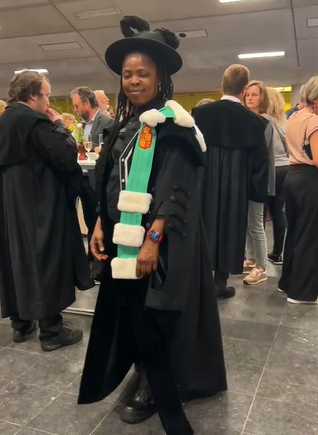
Zanele Muholi receives another accolade
Hundreds of LGBTQI+ community In recognition of the numerous achievements they have amassed, South African photographer and LGBTQ+ activist, Zanele Muholi has been awarded with an honorary doctoral degree from the University of Liége. The University of Liège, or ULiège, is a major public university of the French Community of Belgium founded in 1817 and based in Liège, Wallonia, Belgium.
Muholi is one of three recipients of an Honorary Doctoral Degree (Doctor honoris causa) to be awarded by the University of Liège in Belgium to mark the start of the new 2023-2024 academic year. They were honoured alongside French astrophysicist and philosopher, Aurélien Barrau, and French-American Nobel Prize-winning economist, Esther Duflo. The three recipients were chosen as a way for the university to “reconcile art and science and to commit to re-enchanting our world”.
Muholi’s work primarily focuses on raising awareness about the challenges faced by the LGBTQ+ community in South Africa and promoting visibility and representation and has been exhibited in numerous solo and group exhibitions worldwide. They have received several awards and honours for their work in photography and activism.
Muholi has previously received an Honorary Professorship from the University of the Arts/Hochschule für Künste Bremen (Germany) and their work is included in the collections of several prominent institutions, such as the Museum of Modern Art in New York, the Tate Modern in London, and the Centre Pompidou in Paris.
In addition to awarding the doctorate, the Liége university hosted a conversation between Muholi, Florence Caeymaex (philosopher and Professor of Medical Ethics and Humanities), Anne-Françoise Lesuisse (curator and teacher) and Lyoz Bandie (photographer and a graduate of the Ecole Supérieure des Arts Saint-Luc-Liège).


.